Negative Equity Car Loan: What It Is and How to Get Out
Owe more on your car than it's worth? That's negative equity - being "upside down" on your loan. Here's how to calculate it, why it happens, and how to get out.
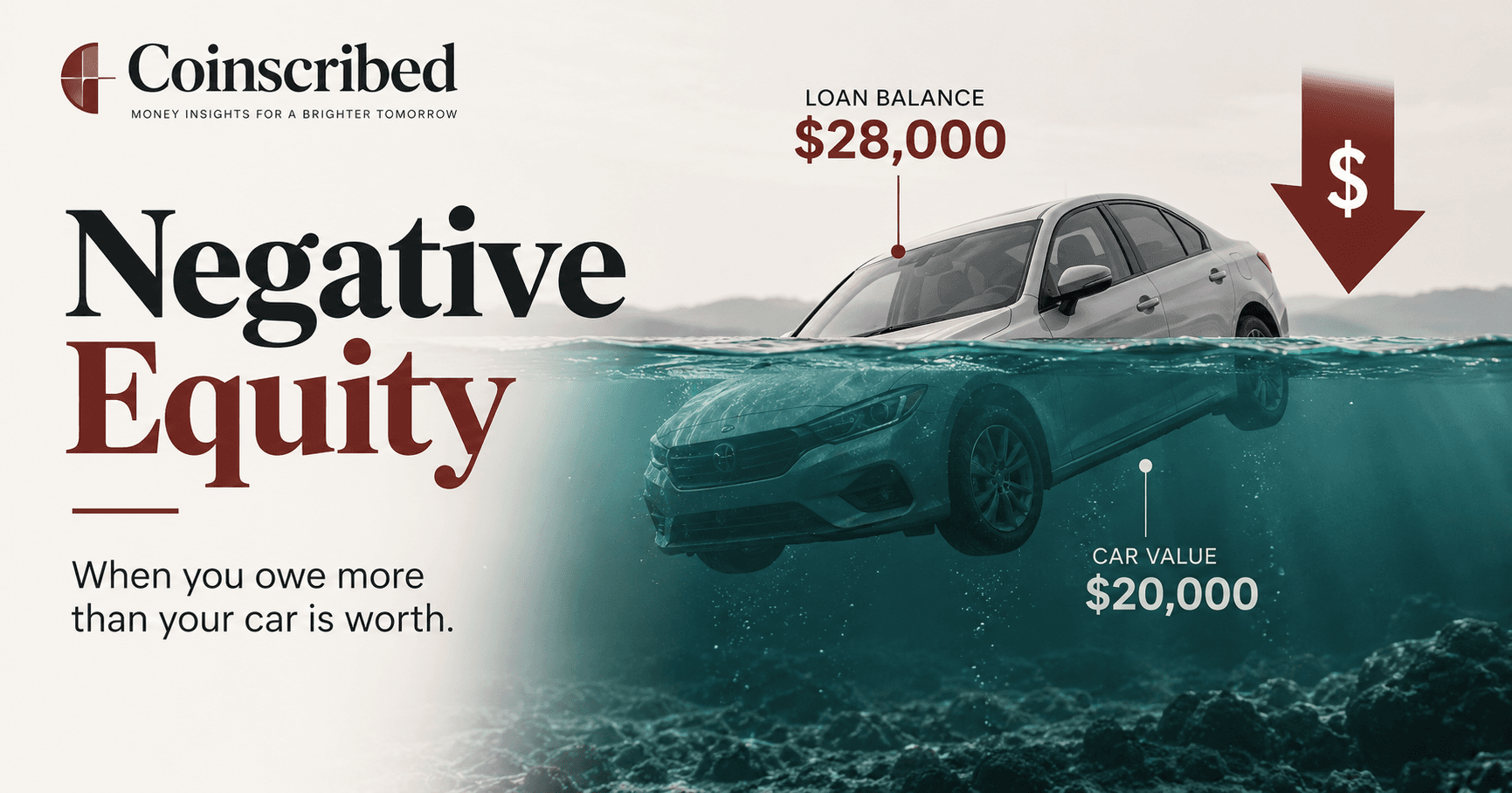
Here's a situation more drivers are waking up to than you'd think: you go to trade in or sell your car, and the dealer tells you the payoff on your loan is higher than what the car is actually worth. That gap is called negative equity — and being stuck in it (often called being "upside down" or "underwater") is now one of the most common car-loan traps in America.
This guide explains exactly what a negative equity car loan is, how to calculate yours in about a minute, why it happens, and the smartest ways to climb back out.
Quick answer: Negative equity on a car loan means you owe more than the car is worth. To find yours, subtract the car's current market value from your loan payoff amount. If you owe $18,000 and the car is worth $15,000, you have $3,000 of negative equity. You get out by paying down the balance faster, keeping the car longer as its value stabilizes, or refinancing — and by not rolling the gap into a new loan.
What Is Negative Equity on a Car Loan?
Negative equity means the amount you still owe on your auto loan is higher than the car's current market value. Lenders and dealers also call this being upside down or underwater on your loan — three names for the same thing.
It matters most at three moments: when you trade in, when you sell, or if the car is totaled in an accident. In each case you're responsible for the gap between what the car is worth and what you owe — and if you're not prepared, that shortfall can follow you into your next loan.
How to Calculate Negative Equity on a Car Loan
The math is simple. You only need two numbers:
- Your loan payoff amount — call your lender or check your account for the exact payoff (it's slightly more than the balance because it includes interest to the payoff date).
- Your car's current market value — check a valuation site or get a dealer/instant-offer quote for the trade-in value.
Then use this formula:
Loan payoff amount − Car's market value = Your equity
If the result is negative, you have negative equity. For example, a $18,000 payoff on a car worth $15,000 leaves you $3,000 underwater. If the result is positive, you have equity you could put toward your next car.
Want to see how extra payments or a different term change your balance over time? Run the numbers in our auto loan calculator or the loan payoff calculator.
How Common Is Negative Equity Right Now?
Very. According to Edmunds data reported in early 2026, more than 3 in 10 drivers trading in a vehicle owed more than it was worth — the highest share since 2021 — and the average amount underwater was about $7,183. Rising car prices, longer loans, and quick depreciation have pushed those numbers up. So if you're upside down, you're far from alone.
Why Do Car Loans Go Upside Down?
Negative equity usually comes from a mix of these:
- Fast depreciation. New cars can lose a large chunk of value in the first year and roughly 40% or more within three years, while your loan balance drops slowly at first.
- Long loan terms. 72- and 84-month loans keep payments low but you build equity very slowly, so you stay underwater longer.
- Small or no down payment. Financing the whole price (plus taxes and fees) means you start underwater on day one.
- Rolling old debt into the new loan. Rolling a previous car's negative equity into your next loan stacks the gap on top of a new car that's also depreciating.
- A high interest rate. More of each early payment goes to interest, so principal — and equity — builds slowly.
How to Get Out of Negative Equity on a Car
There's no magic trick, but these are the moves that actually work, from easiest to most involved:
1. Keep the car and pay extra toward principal
The simplest fix is time plus extra payments. Depreciation slows down as a car ages, while your balance keeps dropping — so equity catches up. Adding even a modest amount to each payment (earmarked for principal) speeds this up. For instance, an extra $100/month can erase a few-thousand-dollar gap in about three years, well before the problem compounds.
2. Make a larger payment or a lump sum
If you have savings, paying the gap down directly gets you to break-even fastest. Use a tax refund or bonus toward principal rather than letting the shortfall ride.
3. Refinance to a lower rate or shorter term
If your credit has improved, refinancing to a lower rate means more of each payment attacks the principal. A shorter term builds equity faster (higher payment, but far less total interest). See how to pay off a loan faster for the tactics.
4. Sell it privately instead of trading in
A private-party sale usually gets you more than a dealer trade-in, which shrinks — or closes — the gap you'd otherwise owe. You'd cover any remaining difference out of pocket, but it's often smaller than rolling it forward.
5. Delay your next car until you're right-side up
The most expensive mistake is trading in while underwater and rolling the gap into a new loan. If you can wait, keep driving the car until you reach positive equity, then trade or sell from a position of strength.
What Happens to Negative Equity When You Trade In?
When you trade in a car with negative equity, that shortfall doesn't disappear — you either pay it or the dealer rolls it into your new loan. As the FTC explains, if you owe $3,000 more than the trade-in value, that $3,000 gets added to the amount you finance on the next car. You then owe more than the new car is worth from the start, deepening the cycle. Paying the gap in cash, or waiting until you have equity, avoids this trap.
Does Negative Equity Affect Your Monthly Payment?
Indirectly, yes. Negative equity itself isn't a monthly charge, but when it's rolled into a new loan it increases the amount financed — which raises both your payment and the total interest you pay. It can also push you toward a longer term to keep the payment manageable, which keeps you underwater even longer. That's why closing the gap before financing again matters so much.
Frequently Asked Questions
How do I calculate negative equity on my car loan?
Subtract your car's current market value from your loan payoff amount. If the payoff is $18,000 and the car is worth $15,000, you have $3,000 of negative equity. A positive result means you have equity instead.
What does it mean to be upside down or underwater on a car?
They're all the same thing: you owe more on your auto loan than the car is currently worth. "Negative equity," "upside down," and "underwater" are used interchangeably.
Is it bad to have negative equity on a car?
It's not an emergency, but it's a risk. It matters most if you need to sell, trade in, or if the car is totaled, because you'd owe the gap. As long as you keep the car and keep paying, equity typically recovers over time.
Can I trade in a car with negative equity?
Yes, but the shortfall must be handled — either paid in cash or rolled into your new loan. Rolling it in leaves you underwater on the next car too, so paying it off or waiting for equity is smarter.
How do I get out of an upside-down car loan fast?
Pay extra toward principal each month, put any lump sums (like a tax refund) toward the balance, or refinance to a lower rate or shorter term. Avoid rolling the gap into a new loan.
How much negative equity is too much?
There's no fixed cutoff, but the more you owe above the car's value, the harder it is to trade or sell without a big out-of-pocket payment. The recent US average was around $7,183 — anything well above that is worth an active payoff plan.
Does gap insurance cover negative equity?
Gap insurance covers the difference between your loan balance and the car's value if it's totaled or stolen — so it protects against negative equity in those specific events, not everyday trade-ins.
The Bottom Line
Negative equity just means your loan is ahead of your car's value — a gap you can measure with one subtraction and close with a clear plan. Calculate where you stand, then pick your route: pay extra, keep the car a bit longer, or refinance. The one move to avoid is rolling the gap into a new loan, which only pushes you further underwater. Handle it deliberately and you'll be back to positive equity — and real choices — sooner than you think.
Get the latest finance & crypto news in your inbox
Market moves, calculators, and banking insights — a few times a week. No spam, unsubscribe anytime.