What Credit Score Do You Need to Buy a Car?
There's no single magic number, but most lenders want to see around 661+ for a good rate on a car loan. Here's the credit score you actually need to buy a car, the rate tiers lenders use, and how to raise your score fast before you apply.
I still remember sitting in a dealership finance office at 24, watching the guy tap my credit score into his screen and go quiet for a second. I had no idea if my number was good, bad, or somewhere in the middle — and that silence cost me. I signed a loan at a rate I now know was way too high, simply because I didn't understand what lenders were looking at. If you're about to buy a car, let me save you from that same mistake.
The short version: there's no single "magic number," but the credit score you bring to the table decides the interest rate you're offered — and that rate quietly adds up to thousands of dollars over the life of the loan. Let's break down exactly what score you need, what happens at each level, and how to nudge your number up before you sign anything.
What Credit Score Do You Need to Buy a Car?
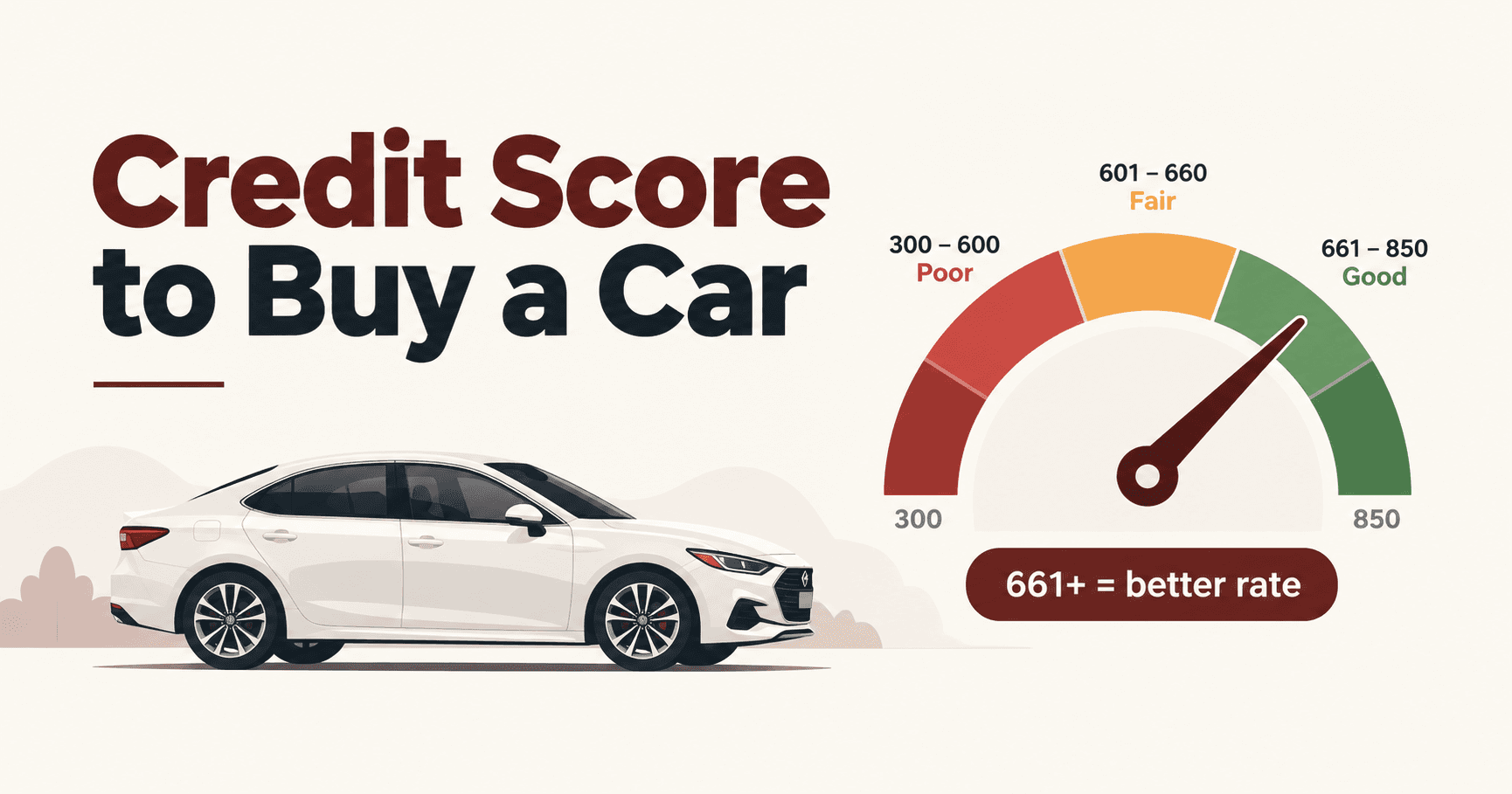
There is no official minimum credit score to buy a car. Lenders finance buyers across the whole 300–850 range every single day. That said, most lenders consider a score of around 661 or higher the sweet spot - that's where you start qualifying for genuinely competitive interest rates. Below that, approval is still very possible, but the rate climbs, sometimes steeply.
Here's the part people get backwards: for most buyers, your credit score doesn't decide whether you get approved - it decides how much you pay. Two people can both drive off in the same car; the one with the higher score just pays far less to borrow the money.
The Quick Answer
- There's no legal minimum - you can buy a car with almost any score.
- Around 661+ (called "prime") gets you a good rate from most lenders.
- 740+ unlocks the very best rates available.
- Below 600, expect approval but a much higher rate - or a bigger down payment requirement.
- Raising your score one tier before you apply can save you thousands.
Credit Score Tiers for a Car Loan (and What Each One Costs You)
Auto lenders sort borrowers into tiers, and each tier gets a different interest rate. These bands come from the credit-scoring world lenders actually use, and knowing where you land tells you what kind of rate to expect before you ever walk in.
| Credit score range | Tier | What it means for your car loan |
|---|---|---|
| 781–850 | Super prime | The best rates lenders offer — you're the ideal borrower |
| 661–780 | Prime | Strong rates and easy approval; the "good" zone most buyers aim for |
| 601–660 | Nonprime | Approved, but at noticeably higher rates |
| 501–600 | Subprime | Higher rates, larger down payment often required |
| 300–500 | Deep subprime | Approval is harder and costs the most; a co-signer helps a lot |
The jump that matters most for your wallet is crossing into prime (661+). That's the line where borrowing gets meaningfully cheaper - so if you're sitting in the high 640s or 650s, a little patience to cross 661 can pay off more than any dealer discount.
Why Your Score Changes the Rate So Much
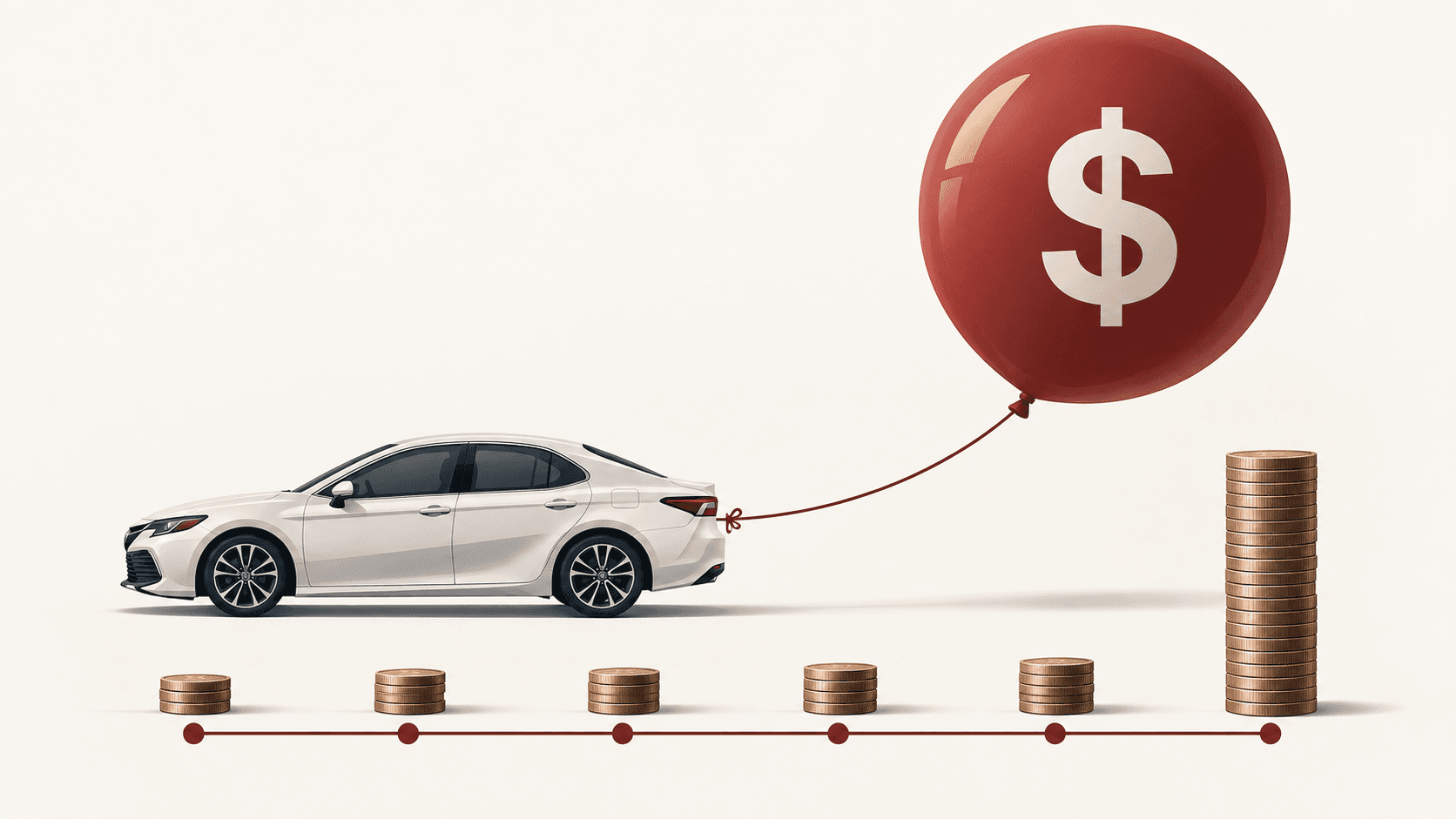
A few percentage points of interest doesn't sound like much until you run the numbers. On a typical car loan, the difference between a prime rate and a subprime rate can mean a noticeably higher monthly payment and thousands of dollars in extra interest over the term. Same car, same price - wildly different total cost, purely because of the score.
That's exactly why it pays to know your number before you shop, and to see how the loan itself breaks down. Our Auto Loan Calculator lets you plug in different rates and terms so you can see how much a better score would actually save you month to month and overall.
Can You Buy a Car With Bad Credit?
Yes — and plenty of people do. A score in the 500s, or even the 400s, doesn't lock you out of buying a car. Lenders who specialize in subprime financing will still approve you. The trade-off is a higher interest rate, and sometimes a requirement for a larger down payment to offset the risk.
If your credit is rough and the purchase can wait a few months, spending that time raising your score is often worth more than any discount a dealer can offer. If it genuinely can't wait, two things soften the blow: a bigger down payment (which shrinks the amount you finance) and a co-signer with strong credit (which lets you borrow at their rate, not yours). Just be careful stretching the loan to 72 or 84 months to make a high-rate payment "fit" - that's a fast track to owing more than the car is worth.
A Word on Negative Equity
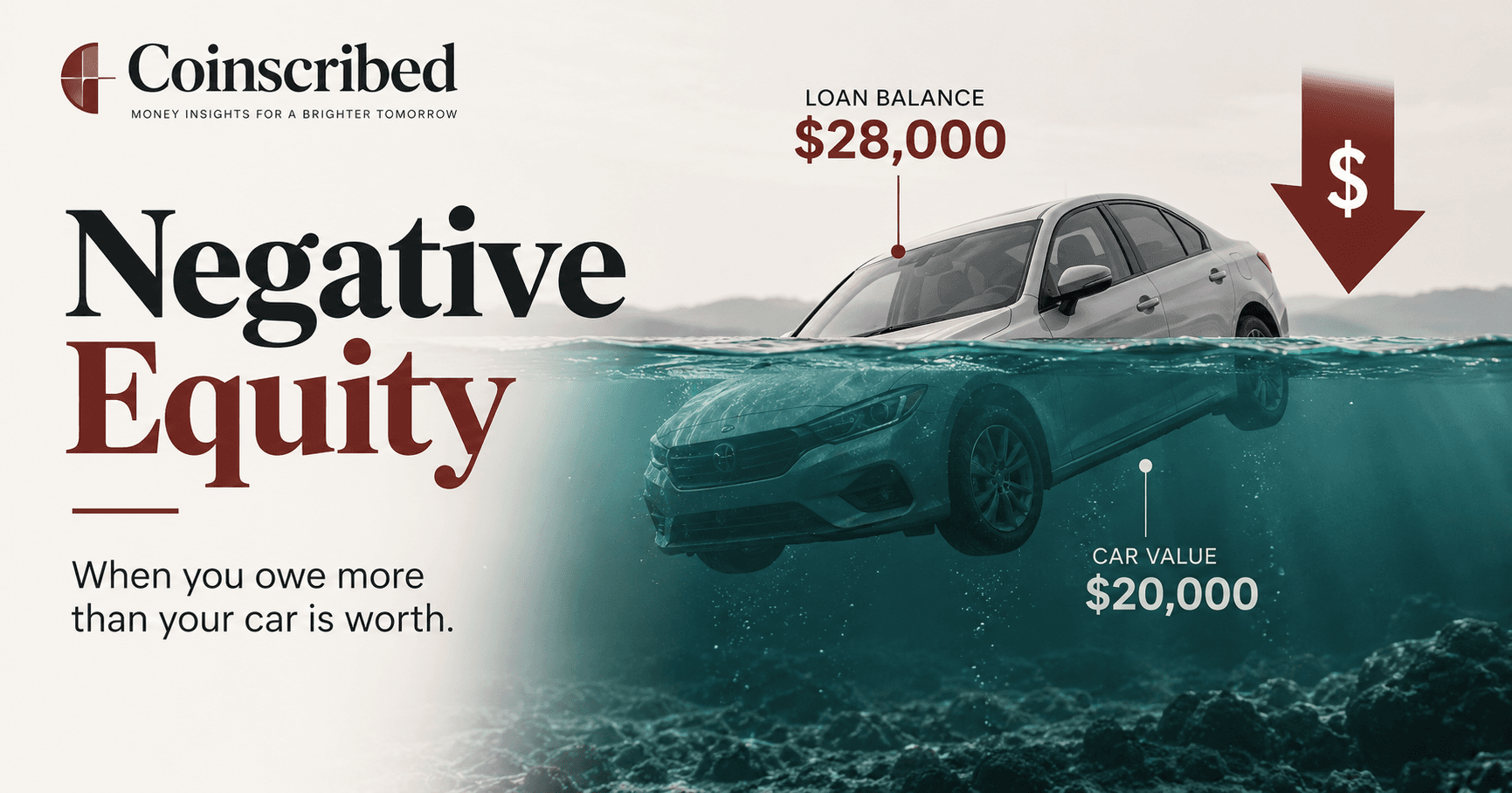
When you finance with a low score and a long term, you're far more likely to end up underwater - owing more on the loan than the car is worth - because cars depreciate fastest in the first few years. If you already know that risk applies to you, it's worth understanding before you sign: here's how negative equity on a car loan works and how to get out of it.
How to Improve Your Credit Score Before Buying a Car
This is the highest-return thing you can do before a car purchase, and most of it is free. You don't need a "credit repair" service - the score responds to a handful of consistent habits, and even a few months of effort can bump you into a cheaper tier.
- Pay every bill on time. Payment history is the single biggest factor in your score. Set up autopay for at least the minimums so a late payment never slips through.
- Pay down your credit card balances. How much of your available credit you're using (your "utilization") is the second biggest factor. Getting balances below 30% of your limit - ideally under 10% - can lift your score quickly.
- Don't open new credit right before applying. Each new application can ding your score a few points, so avoid opening cards or loans in the months before you shop for a car.
- Don't close old cards. The length of your credit history helps you, so keep older accounts open even if you rarely use them.
- Check your credit reports for errors. You're entitled to free reports at AnnualCreditReport.com — disputing a genuine mistake can raise your score faster than almost anything else.
The two habits that move the needle fastest - paying on time and lowering your card balances - are the same ones that keep the rest of your finances healthy. If you're carrying expensive card debt while trying to build your score, tackling that debt does double duty; here's how to pay off a loan faster without wrecking your budget.
Does Checking Your Own Credit Score Hurt It?
No. Checking your own score is a "soft inquiry" and never affects it, so you can look as often as you like. Only a "hard inquiry" - when a lender pulls your credit for an actual application - can cause a small, temporary dip. That's worth knowing at the dealership: if several lenders pull your credit for the same car loan within a short window, the scoring models usually count it as a single inquiry, so rate-shopping doesn't punish you.
The Bottom Line
You don't need perfect credit to buy a car - you can get approved almost anywhere on the scale. But the score you bring decides the rate, and the rate decides how much this car really costs you. Aim for prime (661+) if you can, know your number before you walk in, and if you're close to a better tier, a few months of on-time payments and lower balances might be the most profitable thing you do all year. Run your expected rate through the Auto Loan Calculator first, so you walk into the dealership knowing exactly what a fair deal looks like.
Frequently Asked Questions
What credit score do you need to buy a car?
There's no official minimum - people finance cars across the full 300–850 range. Most lenders offer their best rates at around 661 or higher, and the very lowest rates at 740+. Below 600 you can still get approved, but you'll pay a higher interest rate.
Can I get a car loan with a 500 credit score?
Yes. A 500 credit score falls into the subprime range, and lenders who specialize in subprime auto loans will often approve it. Expect a higher interest rate and possibly a larger down payment requirement. A co-signer with strong credit can meaningfully improve your terms.
What is a good credit score to buy a car?
A good credit score to buy a car is generally 661 or higher, which lenders call "prime." At that level you qualify for competitive rates and easy approval. Scores of 781 and above ("super prime") earn the very best rates available.
Can I buy a $30,000 car with a 650 credit score?
Usually yes. A 650 score sits in the nonprime range, so you can typically finance a $30,000 car, but at a higher interest rate than a prime borrower. A larger down payment lowers the amount you finance and can improve your approval odds and rate.
How can I raise my credit score fast before buying a car?
The fastest levers are paying down credit card balances to lower your utilization, making every payment on time, and disputing any errors on your credit reports. Avoid opening new credit right before you apply, and keep older accounts open to protect your credit history.
Does my credit score decide if I get approved for a car loan?
For most buyers, your score affects the interest rate more than the approval itself — approval is available across almost the entire score range. The higher your score, the lower your rate, which is where the real savings (or costs) show up over the life of the loan.
Is 550 a good credit score to buy a car?
A 550 score is in the subprime range, so it's not "good," but it's still workable. You can get approved, though at a higher rate. If you can wait, raising your score above 600 - and ideally past 661 — before applying can save you a significant amount in interest.
Get the latest finance & crypto news in your inbox
Market moves, calculators, and banking insights — a few times a week. No spam, unsubscribe anytime.