How Does a Car Loan Work? A Simple Guide
A car loan lets you buy a vehicle now and pay it back monthly, with interest. Here's exactly how car loans work - the interest, the monthly payment, the term, and what a typical payment looks like - in plain English.
When I bought my first car, I nodded along in the finance office like I understood everything - the "APR," the "term," the "amount financed" - and honestly, I didn't. I just watched the monthly payment and hoped it fit my budget. It wasn't until years later, doing the math properly, that I realized how much that fuzzy understanding had cost me. So here's the plain-English version I wish someone had given me: exactly how a car loan works, start to finish.
Once you see how the pieces fit together - what you borrow, the interest, and how long you take to pay it back — you can spot a good deal from a bad one in about thirty seconds.
How Does a Car Loan Work?
A car loan (also called an auto loan) lets you buy a vehicle now and pay for it over time. A lender pays the dealer the price of the car up front, and you repay the lender in fixed monthly installments - usually over three to seven years - plus interest, which is what the lender charges you for borrowing the money.
The car itself is the collateral. That means if you stop making payments, the lender can repossess it. It also means auto loans are "secured," which is why their interest rates are usually lower than an unsecured personal loan or a credit card.
The Quick Version
- You borrow the car's price minus your down payment and any trade-in - that's the amount financed.
- You repay it in equal monthly payments over a set term (commonly 36 to 72 months).
- Each payment includes interest (the lender's fee) plus a chunk of principal (the balance you owe).
- A higher credit score gets you a lower interest rate, which makes the whole loan cheaper.
- The car is collateral, so missing payments can lead to repossession.
What Makes Up Your Monthly Car Payment
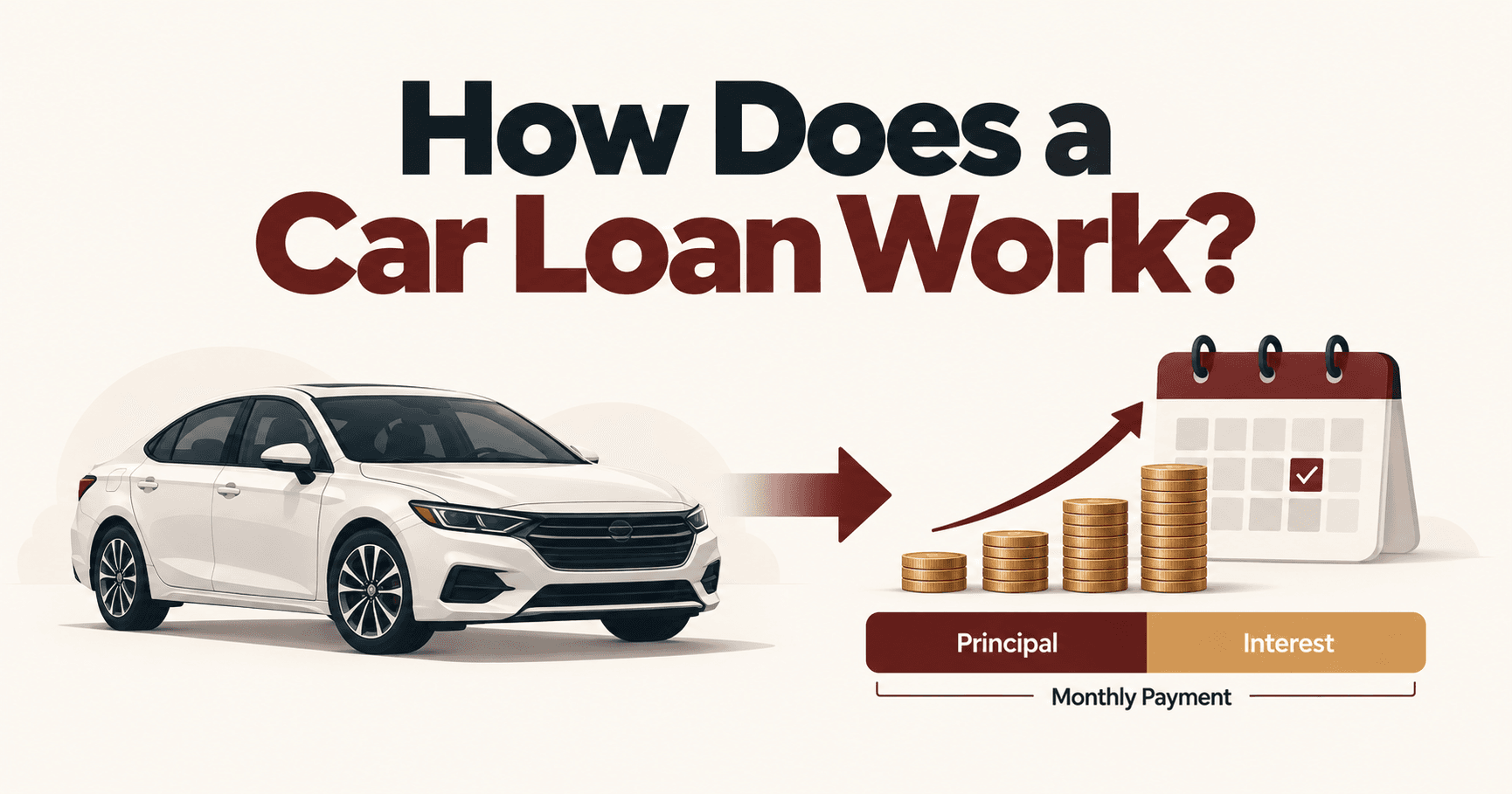
Every monthly payment is split into two parts: interest and principal. Early in the loan, more of your payment goes toward interest because your balance is still high. As the balance shrinks, more of each payment goes toward principal - so you build ownership faster later in the loan. This gradual shift is called amortization, and it's just a fancy word for "paying a fixed amount that slowly flips from mostly-interest to mostly-principal."
Three inputs decide the size of that payment:
| Factor | What it is | Effect on your payment |
|---|---|---|
| Amount financed | Car price minus down payment and trade-in | More financed = higher payment |
| Interest rate (APR) | The yearly cost of borrowing, set largely by your credit | Higher rate = higher payment and more total interest |
| Loan term | How many months you take to repay | Longer term = lower monthly payment, but more total interest |
Want to see how these three change your number? Plug your own figures into our Auto Loan Calculator to see the monthly payment and total interest before you ever sit in a dealership.
How Car Loan Interest Works
Interest is the price of borrowing, quoted as an annual percentage rate, or APR. On most car loans, interest is calculated on your remaining balance, so the faster you pay the balance down, the less total interest you hand over.
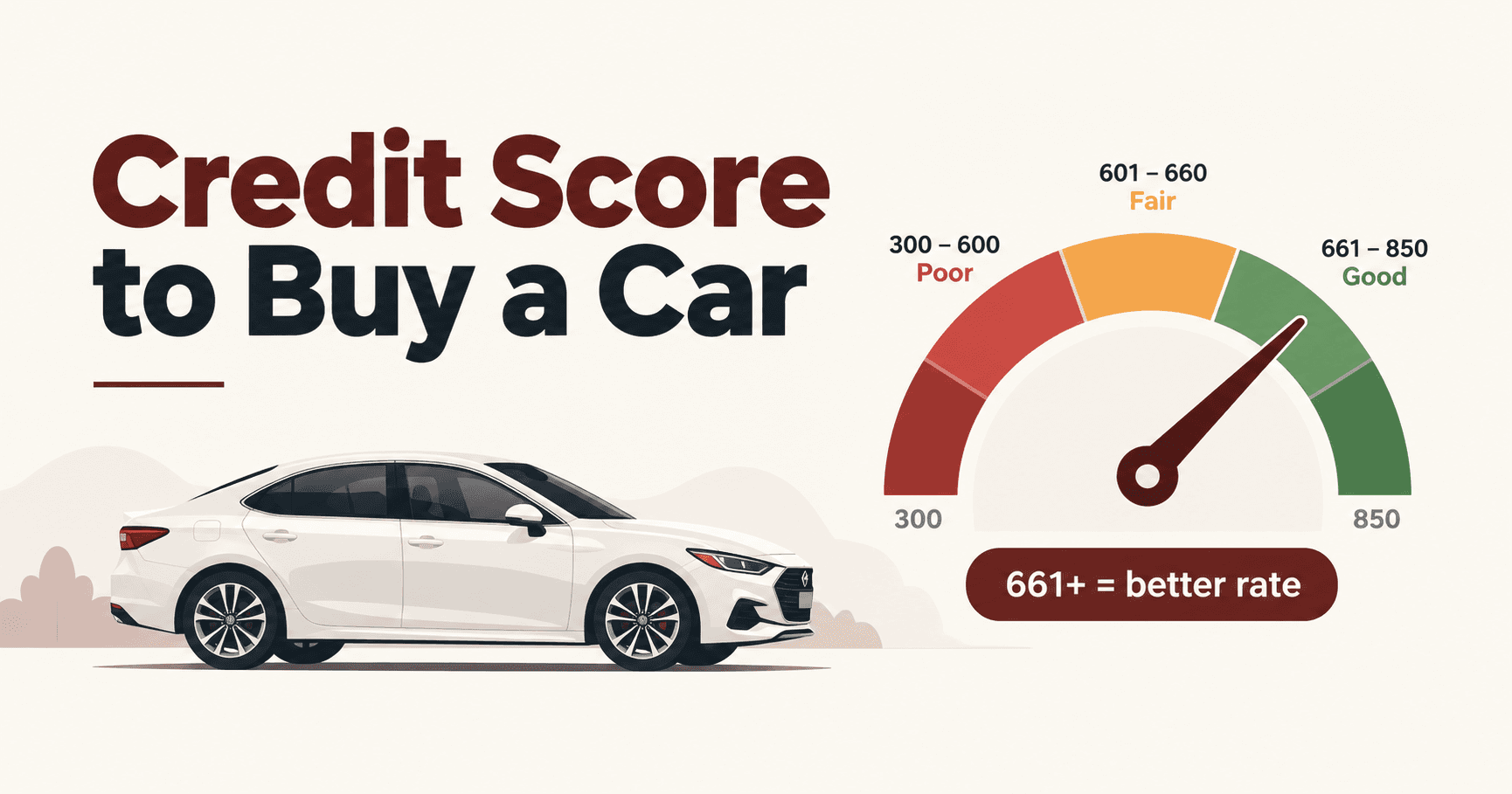
Here's the part that saves real money: the rate you're offered is driven mostly by your credit score. A borrower with excellent credit might get a rate several percentage points lower than someone with fair credit - and on a typical car, that difference adds up to hundreds or even thousands of dollars over the life of the loan. If you want to understand the number itself, here's a plain guide to what APR is and what counts as a good one.
How Much Is a Typical Car Payment?
It varies a lot by price, rate, and term, but as a rough anchor: financing a mid-priced new car over five or six years commonly lands somewhere in the mid-hundreds of dollars a month, while used-car payments tend to run lower. Rather than trust an "average," though, the honest answer is to run your numbers - the car you actually want, your real rate, and a term you're comfortable with.
A useful rule of thumb many buyers follow: keep the loan term as short as your budget comfortably allows. It feels counterintuitive because a longer term makes the monthly figure smaller, but that's exactly the trap - you pay for more months, so the total cost quietly climbs.
Loan Term: The Trade-Off That Costs People the Most
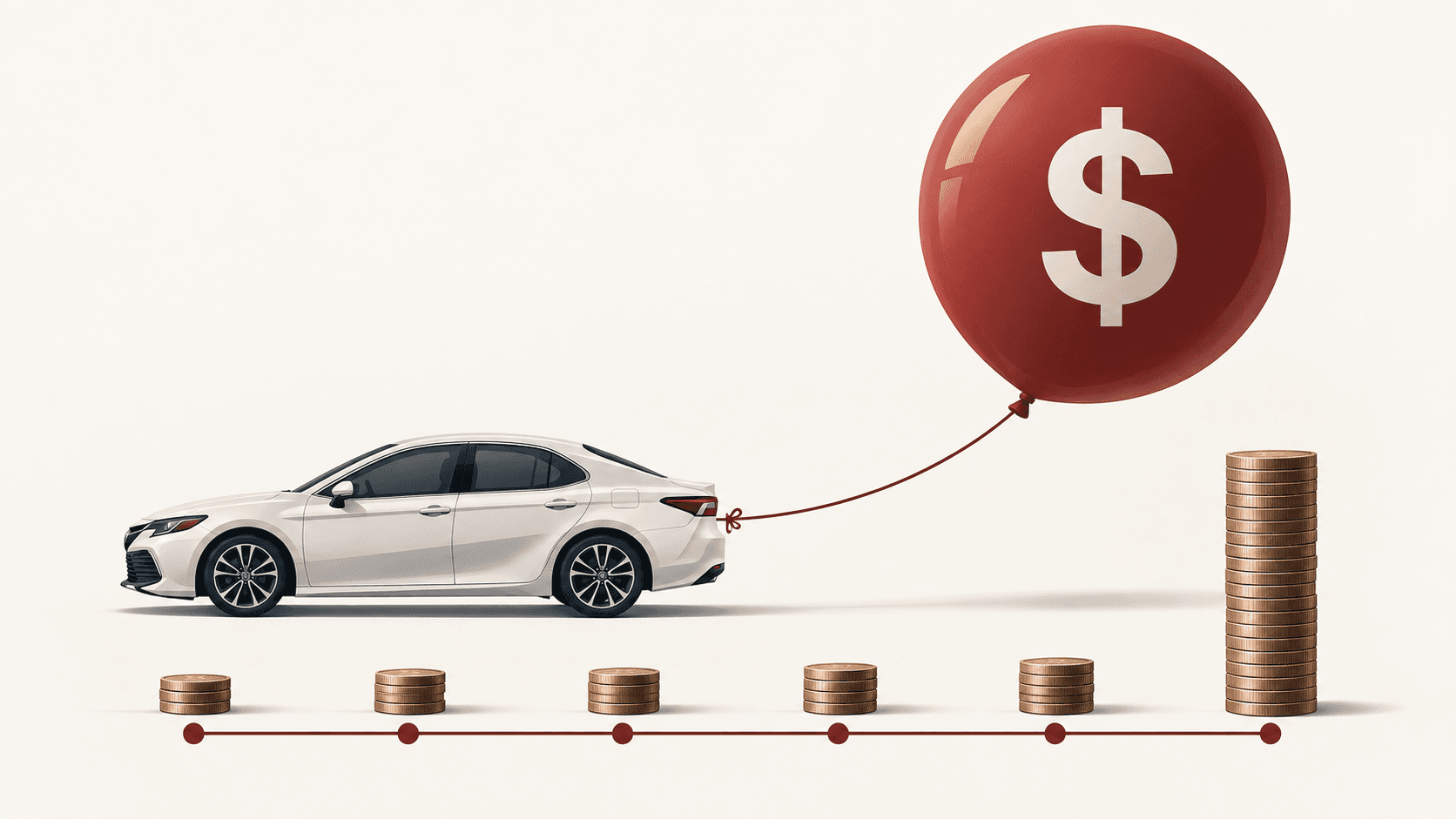
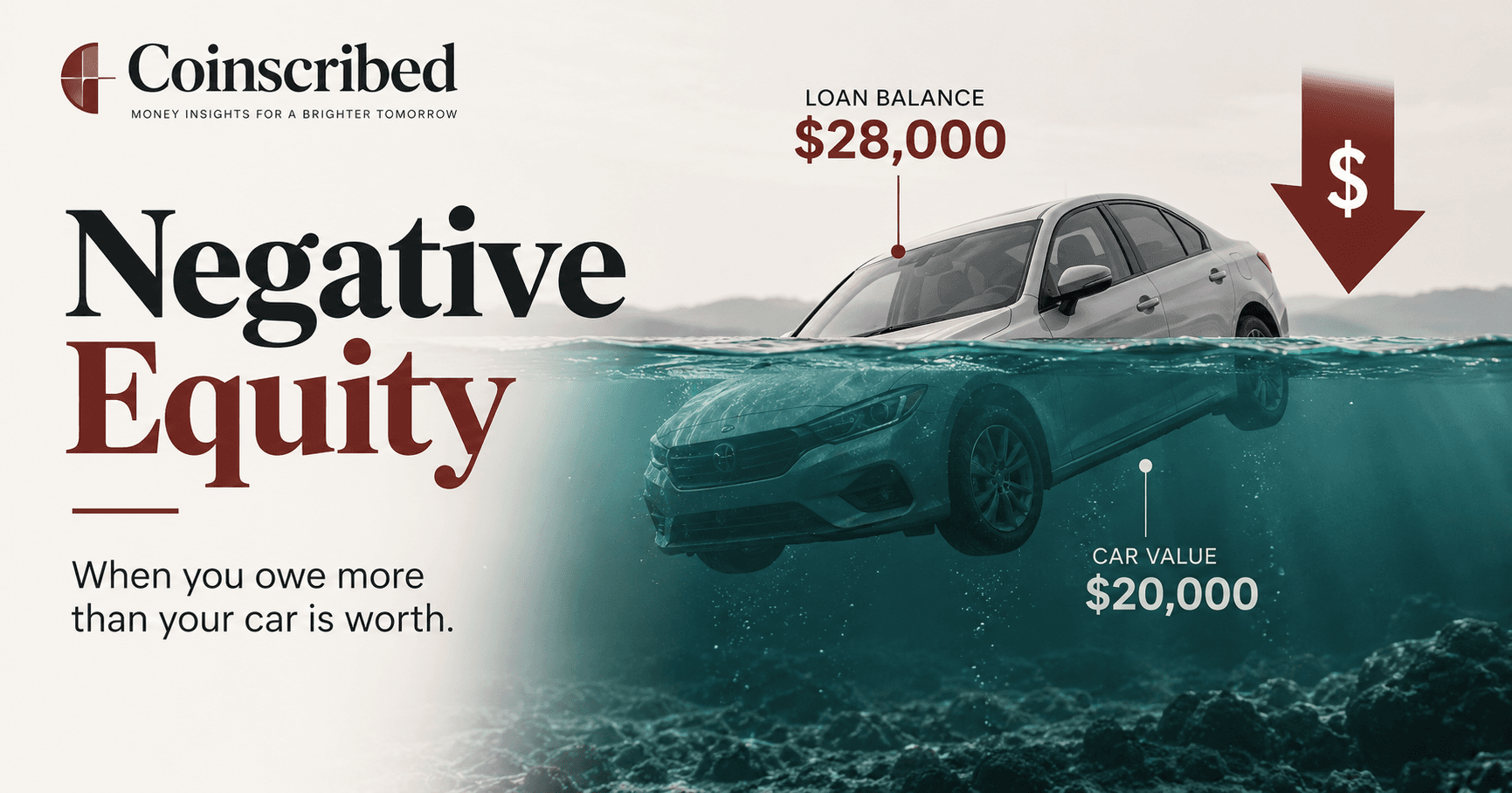
Stretching a loan to 72 or 84 months can make an expensive car feel affordable month to month. But there are two hidden costs. First, you pay interest for far more months, so the total price of the car goes up. Second, cars lose value fast in the early years, so a long loan makes it easy to end up owing more than the car is worth - a situation called negative equity that traps a lot of buyers when they try to trade in.
A shorter term means a higher monthly payment but far less total interest and faster, safer ownership. The sweet spot is the shortest term whose payment fits your budget without straining it.
What You Need to Get a Car Loan
Lenders look at a few things before approving you and setting your rate:
- Credit score. The single biggest factor in your interest rate. Higher is cheaper.
- Income and debts. Lenders check that the payment fits your budget alongside your other obligations.
- Down payment. Money you pay up front. A bigger down payment lowers the amount financed and can improve your rate.
- Loan term. The length you choose, which shapes both the payment and the total cost.
One smart move: get pre-approved by a bank or credit union before you go car shopping. It tells you the rate you actually qualify for, so the dealer's financing offer has real competition - and you negotiate from a position of knowledge instead of hope.
Paying Off a Car Loan Early
Because interest is charged on your balance, paying extra toward principal shrinks the balance faster and cuts the total interest you pay. Even an extra $50 or $100 a month, applied to principal, can shave months off the loan. Just confirm with your lender that extra payments go to principal and that there's no prepayment penalty. If getting debt-free faster is the goal, here's how to pay off a loan faster without wrecking your budget.
The Bottom Line
A car loan isn't complicated once you see the moving parts: you borrow the amount financed, repay it monthly over a term, and pay interest set largely by your credit score. The two levers most in your control are your credit (which sets the rate) and the term (which sets how much total interest you pay). Get those right — and run the numbers in the Auto Loan Calculator before you sign - and you'll pay far less for the same car.
Frequently Asked Questions
How does a car loan work?
A car loan lets a lender pay for your vehicle up front while you repay them in fixed monthly installments over a set term, plus interest. Each payment covers that month's interest first and then reduces your principal balance. The car serves as collateral, so the loan is secured and can be repossessed if you stop paying.
What makes up a monthly car payment?
Each payment is part interest and part principal. Early on, more goes to interest because your balance is high; later, more goes to principal. The payment size is set by three things: the amount financed, the interest rate (APR), and the loan term in months.
How does car loan interest work?
Interest is the cost of borrowing, quoted as an APR, and it's charged on your remaining balance. Your credit score largely determines the rate you're offered, so a higher score means a lower rate and less total interest over the life of the loan.
How much is a typical monthly car payment?
It depends on the car's price, your interest rate, and the loan term, so there's no single number. Rather than rely on an average, calculate your own payment using the price you're considering, the rate you qualify for, and a term you can comfortably afford.
Is a longer car loan term better?
A longer term lowers your monthly payment but increases the total interest you pay, and it makes negative equity more likely because cars depreciate quickly. A shorter term costs more per month but far less overall — so choose the shortest term whose payment fits your budget.
Does my credit score affect my car loan?
Yes. Your credit score is the biggest factor in the interest rate you're offered. A higher score gets a lower rate, which can save hundreds or thousands of dollars over the loan. Your score mostly affects the rate, not usually whether you're approved.
Can I pay off a car loan early?
Usually yes. Paying extra toward principal reduces your balance faster and lowers total interest. Confirm with your lender that extra payments apply to principal and that there's no prepayment penalty before you start.
Get the latest finance & crypto news in your inbox
Market moves, calculators, and banking insights — a few times a week. No spam, unsubscribe anytime.