How Much of Your Credit Should You Use?
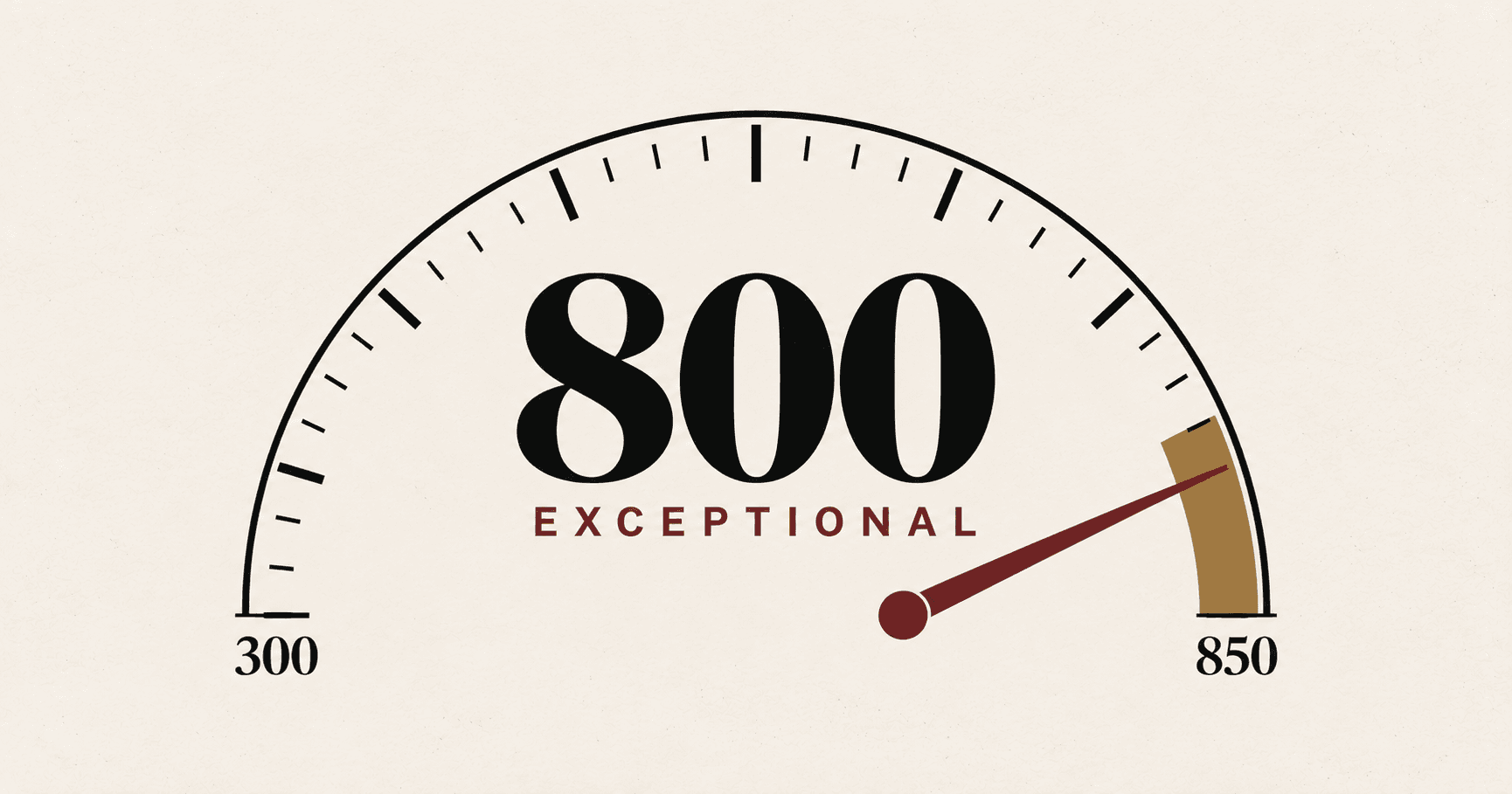
The usual advice is to keep credit card balances under 30% of your limits, but people with 800-plus scores average just 7%. Here's how credit utilization is calculated per card and overall, what to use on any limit, and how to lower the balance your issuer reports.
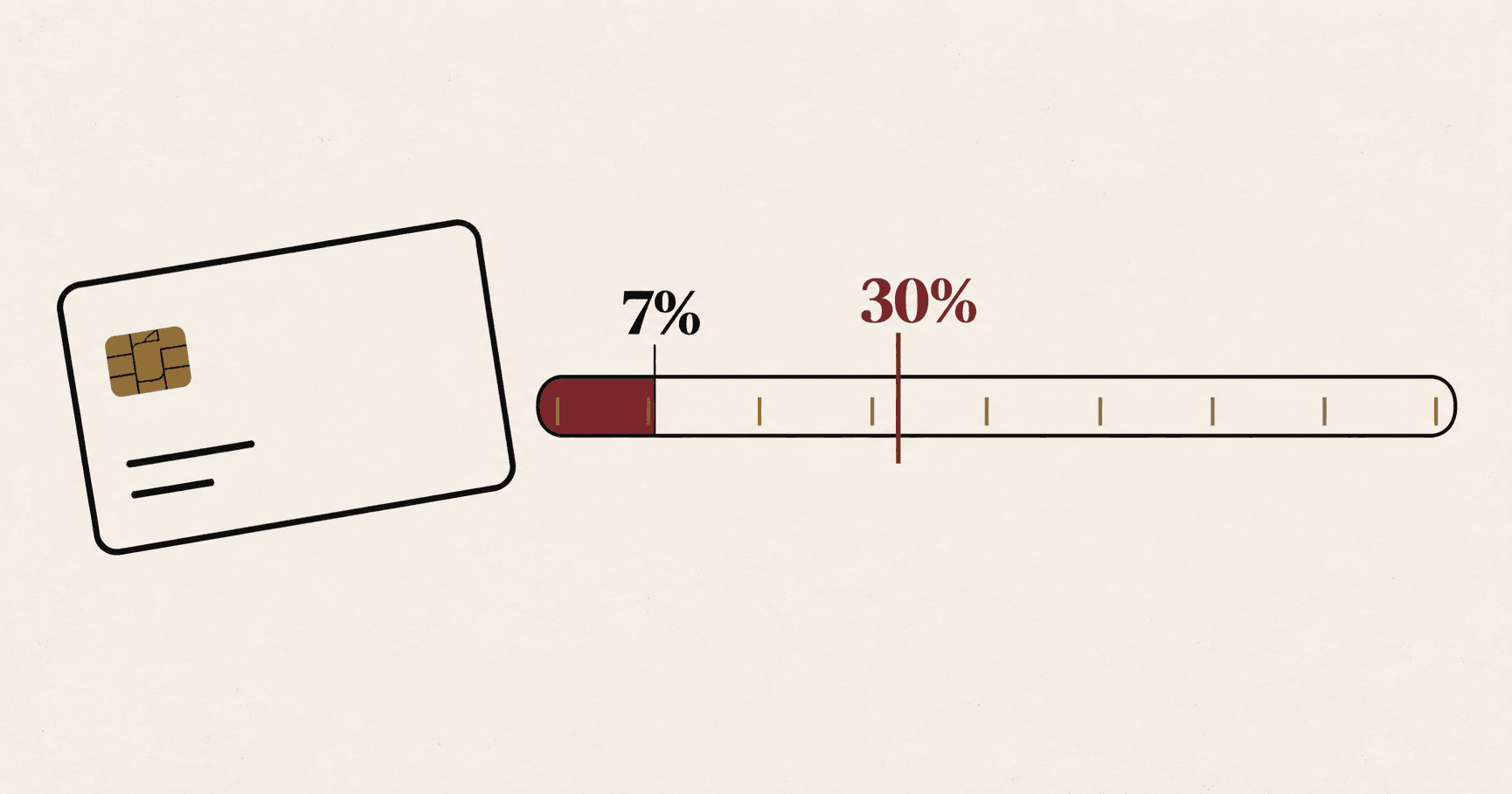
Short answer: Keep your credit card balances under 30% of your credit limits, and under 10% if you want the best scores. That share is your credit utilization ratio, and scoring models check it both across all your cards and on each card. People with 800-plus FICO Scores averaged just 7% in June 2026, according to Experian. What counts is the balance your issuer reports, which is usually your statement balance.
You pay your credit card in full every month. You haven't paid a cent of interest in years. Then a credit app warns that your card use is high, and your score is a few points lower than last month.
Nothing is wrong with your habits. You've run into credit utilization, the part of your score that changes fastest and confuses the most people. Here's how much of your credit you should actually use, how the ratio works per card and overall, and how to lower the number before your next statement.
What is credit utilization?
Credit utilization is the share of your available revolving credit that you're using: your credit card balances divided by your credit limits. You'll also see it called your credit utilization ratio, revolving utilization or balance-to-limit ratio. Same number, different labels.
It carries a lot of weight. The "amounts owed" category makes up 30% of a FICO Score, and FICO says your utilization matters more there than the raw amount of debt you have. A high ratio suggests you're stretched thin, even if you've never missed a payment.
How to calculate your credit utilization ratio
- Add up the balances on your credit cards and any other revolving lines. Use the balances on your latest statements or credit reports, not today's balance in your app.
- Add up the credit limits on those same accounts.
- Divide the total balance by the total limit, then multiply by 100.
Say you owe $1,200 on a card with a $4,000 limit and $300 on a card with a $6,000 limit. That's $1,500 of $10,000, or 15% overall. On their own, the first card is at 30% and the second is at 5%. Both numbers count, and we'll get to why in a minute.
What counts toward credit utilization?
Only revolving accounts, the kind with a limit you can borrow against again and again. Loans with a fixed payoff schedule are judged a different way.
| Account type | Counts toward utilization? |
|---|---|
| Credit cards, including store cards | Yes |
| Personal lines of credit | Yes |
| Car loans, student loans, personal loans and mortgages | No. FICO compares what you still owe with the original loan amount instead |
That split explains a common surprise: using a personal loan to pay off credit cards can raise your score, because the debt moves from a revolving account to an installment one. It's still the same debt, though. We cover the trade-offs in the tips below.
How much of your credit should you use?
Under 30% is the standard guideline, and under 10% is better. In guidance last reviewed in December 2024, the Consumer Financial Protection Bureau says experts advise using no more than 30% of your total credit limit. Experian goes further: for excellent scores, single digits are best, and the ideal may be as low as 1%.
The people at the top of the scale show what that looks like in practice. Here's what Experian found in its June 2026 data for 800-plus scores and perfect 850s:
| Group | Average credit utilization | Same ratio on a $10,000 total limit |
|---|---|---|
| All U.S. consumers | 29% | $2,900 |
| FICO Scores of 800 to 850 | 7% | $700 |
| Perfect 850 FICO Score | 4% | $400 |
The average consumer runs about four times the utilization of an 800-plus scorer: 29% versus 7% in June 2026.
And look at what the bottom row isn't: zero. People with perfect scores use their cards, and those cards reported $3,305 in balances on average in June 2026. That doesn't mean they pay interest. Their balances are just small next to their limits.
Is 30% a hard cutoff?
No. It's a rule of thumb, not a line written into the formula. FICO describes part of its work as deciding how much is too much for a given credit profile, and lower generally scores better, all the way down to the low single digits. Nothing special happens at 31%, and sitting at 29% won't earn you a top score.
So treat 30% as a ceiling, not a target. Above it, the damage tends to grow the closer you get to your limits.
You don't need to carry a balance to use your credit
Utilization is measured on the balance your issuer reports, not on debt you roll over from month to month. The CFPB is blunt about it: you don't need to carry a balance to get a good score.
Carrying one gets expensive fast. Card accounts that paid interest averaged a 22.15% APR in the second quarter of 2026, according to the Federal Reserve. At the Q2 2026 average, rolling over a $3,000 balance, exactly 30% of a $10,000 limit, costs about $55 a month in interest. That's roughly $665 a year for no score benefit at all. We cover the pay-in-full question in our guide to whether paying off a credit card raises your score.
How much of a credit card should you use, in dollars?
Percentages are easy to agree with and hard to use at the register. Here's what each level works out to on common limits. Use your total limit for the overall number and each card's own limit for that card.
| Credit limit | 30% guideline | 10% | 7% (800-plus average) | 4% (850 average) |
|---|---|---|---|---|
| $500 | $150 | $50 | $35 | $20 |
| $1,000 | $300 | $100 | $70 | $40 |
| $2,500 | $750 | $250 | $175 | $100 |
| $5,000 | $1,500 | $500 | $350 | $200 |
| $10,000 | $3,000 | $1,000 | $700 | $400 |
| $15,000 | $4,500 | $1,500 | $1,050 | $600 |
| $25,000 | $7,500 | $2,500 | $1,750 | $1,000 |
| $50,000 | $15,000 | $5,000 | $3,500 | $2,000 |
Small limits are where people get caught. One $160 grocery run on a $500 starter card is already 32%. If you're building credit on a first card, our guide to what your credit score starts at covers the starter-card math. On a small limit, the fix is usually timing rather than spending less, and we explain how below.
Does credit utilization count per card or overall?
Both. Experian says scoring models consider your overall utilization and each account's own ratio. That means one card near its limit can drag on your score even when your total looks fine.
Here's how that plays out with two cards and $1,000 to put toward them:
| Card | Credit limit | Balance | Utilization now | After paying $1,000 on Card A |
|---|---|---|---|---|
| Card A | $2,000 | $1,800 | 90% | 40% |
| Card B | $8,000 | $1,200 | 15% | 15% |
| All cards | $10,000 | $3,000 | 30% | 20% |
Put that $1,000 on Card B instead and you'd also land at 20% overall, but Card A would still sit at 90% of its limit. Same money, worse picture.
Our take on which card to pay first: if you're applying for a mortgage, car loan or new card in the next few months, pay down the card closest to its limit. Otherwise, the card with the highest APR usually saves you the most money, which is the logic behind the debt avalanche.
Is 0% credit utilization bad?
It isn't bad, but it isn't quite the best either. A $0 balance isn't penalized, and you can still have a strong score at zero. FICO says, though, that in some cases a low utilization ratio helps more than using none of your available credit, and Experian puts the ideal near 1%. Even the perfect-850 group averaged 4% in June 2026, not 0%.
The gap is small, and you can close it without paying a cent of interest. Let one small charge, like a streaming subscription, post to one card and show up on the statement. Then pay the full statement balance by the due date. Never carry debt to chase this.
When do credit cards report balances?
Usually once a month, around your statement closing date at the end of each billing cycle, not on your due date. The bill is generally due 21 to 25 days after the statement closes. That gap is why a card you pay in full can still show a high balance on your credit report: the balance was reported before you paid it.

Your closing date is printed on your statement and shown when you log in to your card account. Here's what paying before it does:
| What you do | Balance reported | Utilization the bureaus see | Interest |
|---|---|---|---|
| Pay the full statement balance on the due date | $1,500 | 30% | None |
| Pay $1,200 a few days before the statement closes, then the rest by the due date | $300 | 6% | None |
| Pay only the minimum each month | $1,500 or more | 30% or more, rising with new charges | Charged on the unpaid balance |
The second row is the whole trick. You spend the same and pay the same, you still owe no interest, and the balance on your credit report is a fifth the size.
Does the 15/3 credit card hack work?
Not the way social media sells it. The 15/3 "hack" tells you to pay part of your bill 15 days before the due date and the rest 3 days before. Experian points out two problems. Your credit report shows one account status per month, so two payments don't count as two on-time payments. And since the statement closes 21 to 25 days before the due date, both payments usually arrive after your balance was already reported.
The part that works is the idea underneath it. Pay before the statement closing date, not before the due date.
How to lower your credit utilization: 7 tips
There are only two levers: lower the balance that gets reported, or raise the limits it's divided by. Every tip below pulls one of them.
1. Pay before the statement closes
This is the fastest fix, and it costs nothing. Check your closing date, then schedule a payment for a few days before it so the payment posts in time.
2. Pay more than once a month
If one card carries most of your spending, pay it down every week or every payday. The balance never builds to a big number, so the statement never catches one. If you're carrying debt, the extra payments also trim interest, because many cards compound interest daily.
3. Ask for a higher credit limit
A $3,000 balance on a $10,000 limit is 30%. Raise the limit to $15,000 and the same balance is 20%. Issuers are more likely to say yes if you've paid on time and your income has gone up, so update your income in your account first. Ask whether the request means a hard inquiry, which Experian notes can cause a temporary dip. And it only works if the new limit doesn't become new spending.
4. Keep old cards open
Closing a card deletes its limit from the math, so the same balances suddenly make up a bigger share. If an old card charges an annual fee, ask the issuer to switch you to a no-fee card instead of closing it. We ran the numbers on closing a card in our guide to paying off a credit card.
5. Consolidate with a personal loan, carefully
Moving card debt into a personal loan takes it out of the utilization math, since installment loans don't count toward the ratio. The better reason to do it is a lower interest rate. The catch: the loan adds a hard inquiry and a new account, and if the cards fill back up, you've doubled the debt.
6. Don't count on a balance transfer to fix it
A balance transfer moves debt from one card to another. Your overall ratio only falls if the new card brings a new limit, and that card may sit close to maxed out right after the transfer. A low promotional rate can save real interest, so judge it on the interest. Our guide to paying off credit card debt walks through how balance transfers work.
7. Don't open a card just for the limit
A new card does add available credit. It also adds a hard inquiry and a new account, and applying for several cards at once can hurt your scores. If you'd open the card anyway, the extra limit is a bonus. It's a poor reason on its own.
Before a big application: let one card report a balance
FICO's amounts-owed category also looks at how many of your accounts carry balances. So in the month or two before a mortgage or car loan application, you can pay every card down to $0 before its statement closes except one, which reports a small balance. Pay that one in full by the due date. It's a short-term move, not a habit, because most scores only read your latest balances.
How quickly does your credit score change when utilization drops?
Fast, by credit standards. Most credit scores look only at the balances and limits currently on your credit report, a snapshot, so a lower balance counts as soon as your issuer reports it. That's usually within a billing cycle or two.
The flip side is that utilization has no memory in those scores. A low balance this month doesn't bank anything for next month, and a spike shows up just as quickly.
Newer models are starting to change that. VantageScore 4.0 and FICO Score 10T use trended data, which looks at whether your balances have been rising or falling over periods as long as 24 months. Fannie Mae and Freddie Mac lenders can now use VantageScore 4.0, so if a mortgage is a year or two away, a steady paydown counts for more than a one-month cleanup.
The bottom line
Keep the balances your cards report under 30% of your limits, aim for under 10% if you're chasing a top score, and remember that both your total and each card count. Because issuers report your statement balance, the easiest lever is timing: pay before the statement closes, then pay the rest by the due date.
Our take: don't obsess over the exact percentage every month. For most scores, utilization is a snapshot that only matters on the day a lender pulls your credit. Keep it low as a habit, never pay interest to manage it, and save the fine-tuning, like single digits or one card reporting a balance, for the month or two before a big application.
Want to see how long a balance will take to clear? Try our credit card payoff calculator. For the bigger picture, see what counts as a good credit score, what an 800 credit score gets you, and our credit scores hub. Need a quick definition? Here's credit utilization in our glossary.
Frequently Asked Questions
- What is a good credit utilization ratio?
- Under 30% is the guideline most experts use, including the Consumer Financial Protection Bureau, and under 10% is where the highest scores tend to sit. In Experian's June 2026 data, people with FICO Scores of 800 or higher averaged 7% utilization and those with a perfect 850 averaged 4%, compared with 29% for all consumers.
- Is 0% credit utilization bad?
- No. A $0 balance on every card isn't penalized, and you can still have a strong score. FICO says a low reported balance can sometimes help a little more than none, and Experian puts the ideal near 1%. The difference is small, so let one small charge report and pay it in full rather than carrying debt.
- How much should I use on a $1,000 credit limit?
- Keep the reported balance under $300 to stay below the common 30% guideline, and under $100 for the single-digit utilization the highest scorers have. On a $500 limit, those amounts are $150 and $50. If you spend more than that, pay part of the balance before the statement closing date so a smaller number gets reported.
- Does credit utilization matter if I pay my card in full every month?
- Yes. Card issuers usually report the balance from your latest statement, so a card you pay in full can still show 30% or more on your credit report. To lower the reported number, pay part of the balance a few days before the statement closes, then pay the rest by the due date. You'll still owe no interest.
- Is credit utilization calculated per card or overall?
- Both. Scoring models look at your total card balances divided by your total limits, and at each card's own ratio, according to Experian. So one card near its limit can hurt your score even when your overall utilization looks low. If you're paying down debt before a loan application, start with the card closest to its limit.
- How long does high credit utilization affect your credit score?
- Usually only until a lower balance is reported. Most credit scores read just your latest balances and limits, so utilization has no memory in them and can recover within a billing cycle or two. Newer models such as VantageScore 4.0 and FICO Score 10T also look at balance trends, so months of high balances can count for longer there.
- What does "proportion of balances to credit limits is too high" mean?
- It's a score reason saying your credit utilization is pulling your score down: the balances reported on your credit cards or other revolving accounts are high compared with their limits. It can appear even if you pay in full, because the reported balance is usually your statement balance. Paying down before the statement closes is the usual fix.
- How often should I use my credit card?
- There's no required number of purchases. Scores read the balance your issuer reports, usually once a month, not how often you swipe. Use each card now and then, because issuers can close cards that sit unused, and that removes the limit from your utilization. A small recurring charge on autopay, paid in full, keeps a card active with no interest.
Sources
- FICO says (myfico.com)
- experts advise (consumerfinance.gov)
- Experian goes further (experian.com)
- 800-plus scores (experian.com)
- perfect 850s (experian.com)
- Federal Reserve (federalreserve.gov)
- Experian points out (experian.com)
- Experian notes (experian.com)
- trended data (experian.com)
Get new money guides and tools in your inbox
New guides, calculators and data studies when they publish. No spam, unsubscribe anytime.