Should You Pay Off Your Car Loan Early?
Paying off a car loan early feels like the responsible move, and often it is. But not always. Here's the actual math on what early payoff saves you, the situations where it's clearly worth it, and the times your money genuinely does more good somewhere else.
Say you've just come into $6,000, maybe a bonus or a tax refund, and you still owe about that much on your car. Your first instinct is to wipe out the loan, because debt-free feels good. Then someone tells you that's a mistake and you should invest it instead.
Here's the thing: both instincts are partly right, and neither means much until you run the numbers. Once you do, the answer usually becomes obvious in about ten minutes, and it depends on a few things you can check today.
So let's do this properly. Not with vague advice about "being debt-free," but with the actual math on what early payoff saves, when it's clearly the right move, and when your money genuinely does more good somewhere else.
Quick answer: Paying off a car loan early saves you interest, and it's usually worth doing if your rate is above roughly 5–6%, you already have an emergency fund, and your loan has no prepayment penalty. It's usually not worth it if you'd drain your savings, if you carry credit card debt at a much higher rate, or if your loan is genuinely 0%.
Can you pay off a car loan early?
Yes. In the US you can pay off a car loan early, and the vast majority of auto loans have no penalty for doing it. You can send extra with each payment, make occasional lump sums, or clear the whole balance in one go.
Two things to check before you start, though:
- Prepayment penalty. Most auto loans don't have one, but some - particularly subprime loans and a few older contracts - do. It'll be in your loan agreement, usually under "prepayment."
- How extra payments get applied. This trips up more people than the penalty does. Some lenders treat extra money as your next scheduled payment rather than applying it to principal, which saves you nothing at all. Call and tell them explicitly: apply it to principal.
If you want to clear the loan entirely, ask your lender for a payoff quote (sometimes called a payoff letter). That's the exact amount to close the account on a specific date, including interest accrued up to that day - it won't match your statement balance, so don't just send that figure and assume you're done.
Why paying off a car loan early saves money at all
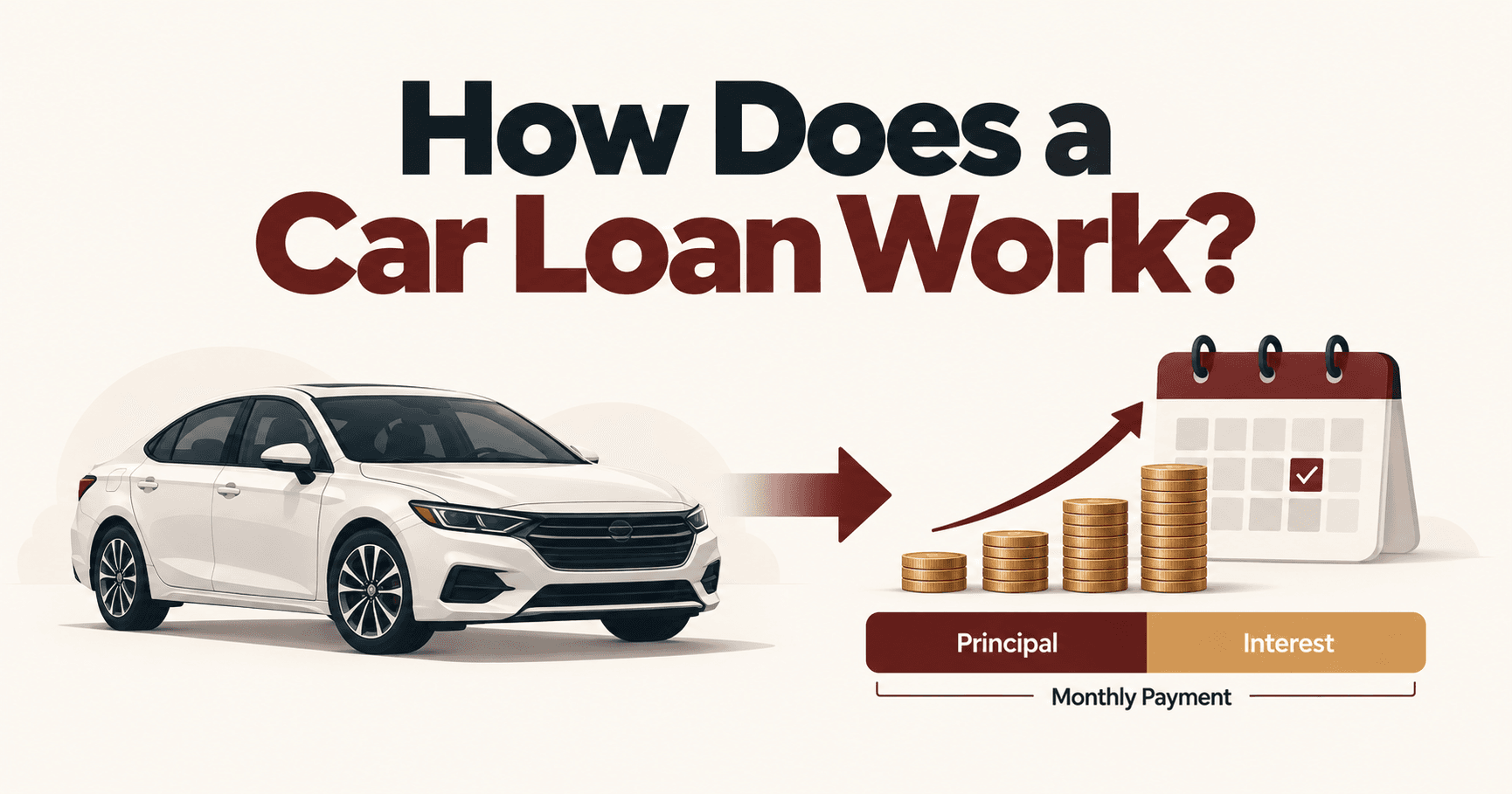
A car loan charges interest on whatever you still owe. That's the whole mechanism. Every month, the lender calculates interest on your remaining balance, takes that out of your payment, and applies what's left to the principal.
So when you throw extra money at the principal, you're shrinking the balance that all future interest gets calculated on. You don't just save the interest for that month - you save it for every single month left on the loan. That's why extra payments early in the term do far more than the same amount near the end.
If the mechanics feel fuzzy, we broke them down properly in how a car loan actually works.
Related: How to pay off a loan faster
What you actually save by paying extra
This is the part almost nobody quantifies, so here it is. Take a $20,000 car loan at 7.5% APR over 60 months. The scheduled payment is about $401, and if you just follow the schedule you'll pay roughly $4,046 in interest.
Now add a fixed extra amount to every payment:
| Extra per month | Paid off in | Months saved | Interest saved |
|---|---|---|---|
| +$25 | 56 months | 4 | $295 |
| +$50 | 53 months | 7 | $549 |
| +$100 | 47 months | 13 | $965 |
| +$200 | 38 months | 22 | $1,552 |
Look at the $50 row. Fifty dollars a month - one dinner out - ends the loan more than half a year early and keeps about $549 in your pocket. And notice the returns aren't linear: doubling from $100 to $200 extra doesn't double the saving, it nearly does. That's compounding working in reverse, in your favour.
Want your own figures? Run your balance, rate and remaining term through our auto loan calculator. And if you're curious how much your original loan term is costing you, we computed that across every common term in the Car Loan Cost Index.
What happens when you pay off a car loan early?
Mechanically, more happens than people expect. Here's the sequence:
- The lender closes the account and reports it to the credit bureaus as paid in full. Expect that to show up within a month or two.
- You get the title. The lender releases its lien and either mails you the title or notifies your state's DMV, depending on where you live. This can take a few weeks - chase it if nothing arrives after about 30 days, because you'll need a clean title to sell the car.
- Your monthly payment stops. If it was on autopay, confirm the transfer is actually cancelled so you're not sending money to a closed account.
- Your credit score may dip slightly. Closing an active installment account usually costs a few points temporarily. More on that below.
- Gap insurance becomes pointless. If you were paying for gap coverage (which covers the difference between what you owe and what the car's worth), you no longer owe anything - so cancel it and you may be owed a partial refund.
One more practical note: check whether you're owed anything back. If you had an extended warranty or gap policy financed into the loan and you cancel it early, a prorated refund is often available. Nobody will volunteer this - you have to ask.
When paying off your car loan early is clearly worth it
Four situations where I'd do it without much hesitation:
- Your rate is high. Above roughly 7–8%, the interest you avoid is a genuinely good, guaranteed return. There's no investment that pays you a certain 8% with zero risk.
- You already have an emergency fund. If a surprise repair or a lost paycheque wouldn't force you into a credit card, you can afford to put spare money toward the loan.
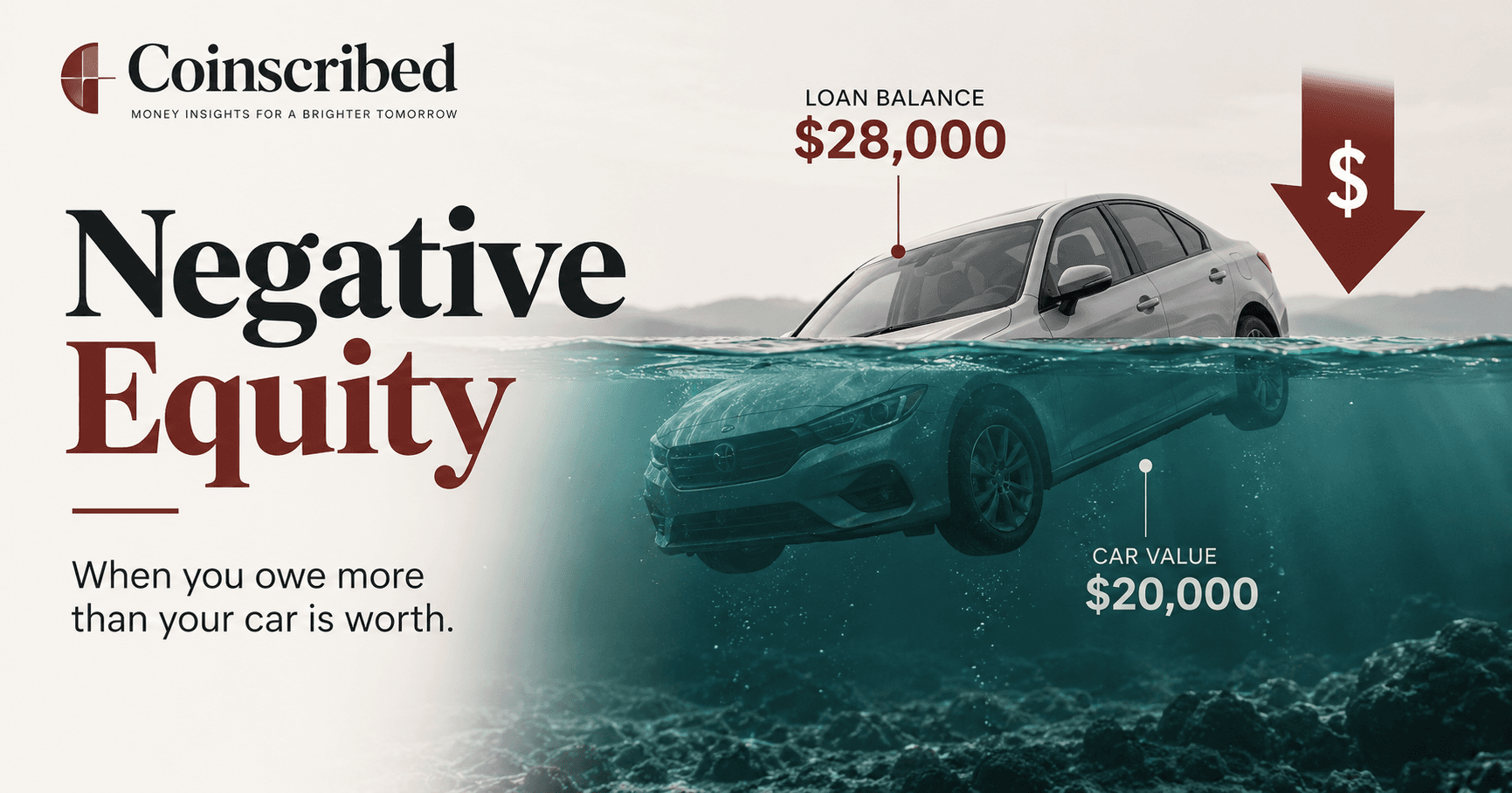
- You're underwater on the car. If you owe more than it's worth - negative equity — paying down the gap protects you if the car gets totalled or you need to sell.
- You want the monthly obligation gone. This one isn't mathematical, and that's fine. A smaller set of fixed monthly commitments genuinely reduces stress and increases your flexibility if your income changes.
When you should not pay it off early
This is where the "debt is always bad" instinct gets people into trouble.
- You'd drain your savings to do it. A paid-off car and an empty bank account is a fragile position. One transmission failure and you're back in debt, probably at a worse rate. Build the emergency fund first.
- You have credit card debt. Card APRs typically run far above car loan rates. Every dollar aimed at the car instead of a card at 20%+ is a dollar working against you. Clear the cards first - it's not close.
- Your loan has a prepayment penalty. Rare, but check. If the penalty roughly cancels the interest saved, there's no point.
- The loan is genuinely 0%. More on this below, because it's the one case where the maths flips completely.
- You're not getting the employer match on your retirement account. If your employer matches contributions and you're leaving that on the table, that's an immediate return no loan payoff can beat.
Should I pay off my car loan early or invest instead?
This is the invest-it-instead argument, and it's a fair one, but it's usually framed wrong. The honest comparison isn't "loan payoff vs. the stock market's historical average." It's "a guaranteed return equal to my interest rate vs. an uncertain return that might be higher."
Paying off a loan at 7.5% is mathematically identical to earning a risk-free, tax-free 7.5%. That's an excellent deal. Long-run market returns have historically been higher, but they're volatile, taxable in a regular brokerage account, and absolutely not guaranteed over any particular five-year stretch.
How I'd think about it:
- Rate above ~7%: paying off the loan is a strong, low-risk choice.
- Rate around 4–6%: genuinely a toss-up. Depends on your risk tolerance and whether the monthly payment is stressing you.
- Rate below ~4%: investing the money (especially in a tax-advantaged account with a match) usually wins over long periods.
One thing the spreadsheet can't measure: how the debt makes you feel. If that loan payment is a low hum of anxiety every month, clearing it has real value that doesn't show up in a return calculation. Don't let anyone talk you out of that.
Should I pay off a 0% interest car loan early?
Almost never. If you genuinely have 0% financing, the lender is letting you use their money for free. There's no interest to save, so paying early saves you exactly nothing.
The better move is to keep making the minimum payment on schedule and put the money you would have used into a high-yield savings account, where it earns something. You end up with the same paid-off car and a pile of interest you collected along the way.
Two cautions. Confirm it's truly 0% and not a promotional rate that jumps later - read the term length carefully. And if 0% came at the cost of giving up a cash rebate, the financing wasn't actually free; you paid for it in the purchase price.
Does paying off a car loan early help your credit?
Usually it causes a small, temporary dip. That surprises people, so it's worth explaining.
An active car loan is an installment account in good standing, and it contributes to your credit mix and your record of on-time payments. When you close it, you lose an active account, and if it was your only installment loan, your mix gets thinner. A drop of a handful of points is common, and it typically recovers.
What it does not do is hurt you in any lasting way. Your payment history stays on your report for years. And if you're planning a mortgage application in the next few months, the reduced monthly obligation usually helps your debt-to-income ratio more than the small score dip hurts. For where your number sits today, see what counts as a good credit score.
The best way to pay off a car loan early
If you've decided to go for it, these are the approaches that actually work:
- Add a fixed amount to every payment. The simplest and most predictable method - see the table above for what different amounts achieve.
- Switch to biweekly payments. Paying half your payment every two weeks means 26 half-payments a year, which is one extra full payment annually without it ever feeling like one.
- Round up. If your payment is $401, pay $450. Small, painless, and it compounds.
- Throw windfalls at it. Tax refunds, bonuses, a side-gig month. Lump sums early in the term do the most work.
- Refinance, then keep paying the old amount. If you qualify for a lower rate, don't pocket the difference - keep paying what you were paying and the loan ends much sooner.
Whichever you pick, call your lender and confirm two things: that extra money goes to principal, and that there's no prepayment penalty. Some lenders will otherwise hold an overpayment as your next scheduled payment, which achieves nothing at all.
I just paid off my car loan - now what?
Four things worth doing in the first month, because most people do none of them:
- Get the title in your hands. Confirm the lien is released and the title arrives (or is recorded electronically in your state). Don't assume - follow up if a month passes.
- Cancel autopay and any gap insurance. And ask about prorated refunds on gap coverage or an extended warranty you no longer need.
- Redirect the payment, don't absorb it. This is the big one. You've been living without that money already - send it straight to an emergency fund, a retirement account, or your next car fund. If you let it dissolve into everyday spending, you've traded a loan for nothing.
- Check your credit report in a couple of months. Confirm the account shows as paid and closed, with no lingering balance.
Related: Debt snowball vs avalanche: which debt to pay first
So, what should you actually do?
Work through it in this order. Do you have a small emergency cushion? Are you free of credit card debt? Are you capturing any employer retirement match? Is your car loan rate above roughly 6%, with no prepayment penalty?
If you answered yes to all of those, paying the loan off early is a genuinely good use of the money - a guaranteed return with the bonus of one less monthly obligation. If you answered no to any of them, fix that first. The car loan will still be there.
Back to that $6,000: at a rate near 7%, with a solid emergency fund and no card balances, paying the car off is a strong choice. And there's one benefit no spreadsheet captures: once the payment is gone, that money is yours again every month.
Not sure whether your payment is high to begin with? Compare it with the average car payment for new and used cars.
Frequently Asked Questions
- Should I pay off my car loan early?
- Usually yes, if three things are true: your interest rate is above roughly 5–6%, you already have an emergency fund, and your loan has no prepayment penalty. Paying early saves interest because interest is charged on your remaining balance. It's usually not the right move if you'd drain your savings, if you carry credit card debt at a much higher rate, or if your loan is genuinely 0%.
- Can you pay off a car loan early?
- Yes. Almost all US auto loans can be paid off early, and most have no prepayment penalty - though you should confirm that in your loan agreement, since some subprime loans do. To clear the balance entirely, request a payoff quote from your lender: that's the exact amount needed to close the account on a given date, including interest accrued up to that day, so it won't match your statement balance.
- What happens when you pay off a car loan early?
- The lender closes the account and reports it as paid in full, releases its lien and sends you the title (usually within a few weeks), and your monthly payment stops. Your credit score may dip a few points temporarily because an active account closed. It's also worth cancelling autopay and any gap insurance, and asking about prorated refunds on gap coverage or an extended warranty you financed.
- How much do I save by paying off my car loan early?
- It depends on your rate, balance and how much extra you pay. On a $20,000 loan at 7.5% APR over 60 months, adding $25 a month saves about $295 in interest and 4 months; $50 a month saves about $549 and 7 months; $100 a month saves about $965 and 13 months; and $200 a month saves roughly $1,552 and 22 months.
- Should I pay off my car loan early or invest the money?
- Paying off a loan is equivalent to earning a guaranteed, tax-free return equal to your interest rate. Above roughly 7%, that's hard to beat on a risk-adjusted basis. Between 4% and 6% it's genuinely a toss-up. Below about 4%, investing - especially in a tax-advantaged account with an employer match - usually wins over long periods.
- Should I pay off a 0% interest car loan early?
- Almost never. With true 0% financing there is no interest to save, so paying early gains you nothing. Keep making the scheduled payment and hold the extra money in a high-yield savings account where it earns something. Just confirm the rate is genuinely 0% for the full term, and that you didn't forfeit a cash rebate to get it.
- Does paying off a car loan early hurt your credit score?
- It often causes a small, temporary dip because you close an active installment account, which can thin out your credit mix. A drop of a few points is common and typically recovers. Your payment history stays on your report for years, and the reduced monthly obligation usually helps your debt-to-income ratio - which matters more if you're applying for a mortgage.
- What is the best way to pay off a car loan early?
- Add a fixed extra amount to every payment, since that consistently reduces the principal interest is charged on. Other effective approaches: switching to biweekly half-payments (which adds one extra full payment a year), rounding your payment up, putting windfalls like tax refunds toward the balance, and - if you refinance to a lower rate - continuing to pay the old, higher amount.
Sources
- CFPB: What is a prepayment penalty? (consumerfinance.gov)
- CFPB: Can I prepay my loan at any time without penalty? (consumerfinance.gov)
- CFPB: Auto loans consumer tools (consumerfinance.gov)
Get new money guides and tools in your inbox
New guides, calculators and data studies when they publish. No spam, unsubscribe anytime.