What Is the Average Car Payment in 2026?
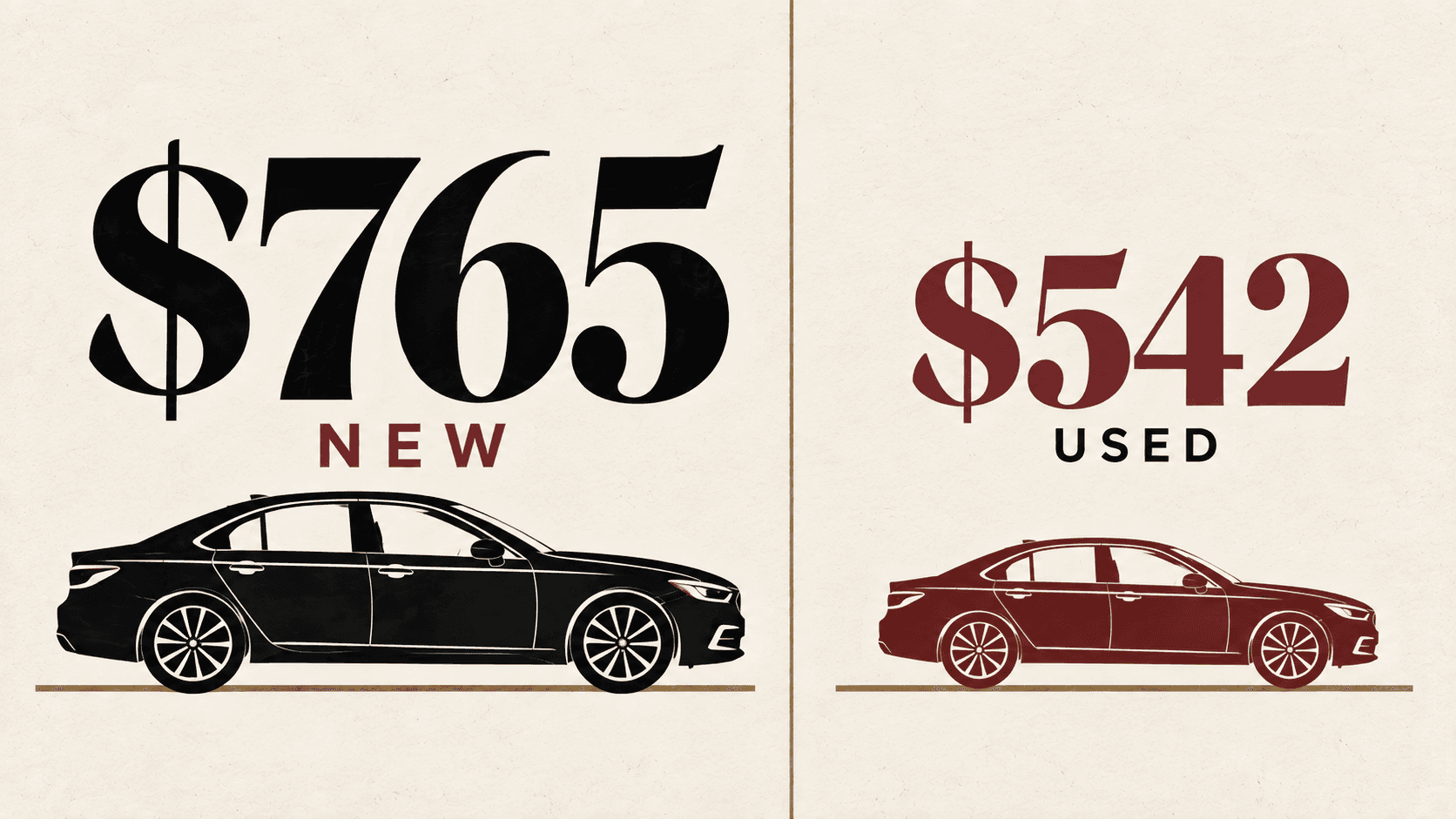
New car buyers are paying $765 a month on average, used car buyers $542. Here's what's driving those numbers, how your credit score changes them, and an honest answer to the question people really mean: is my own car payment too high?
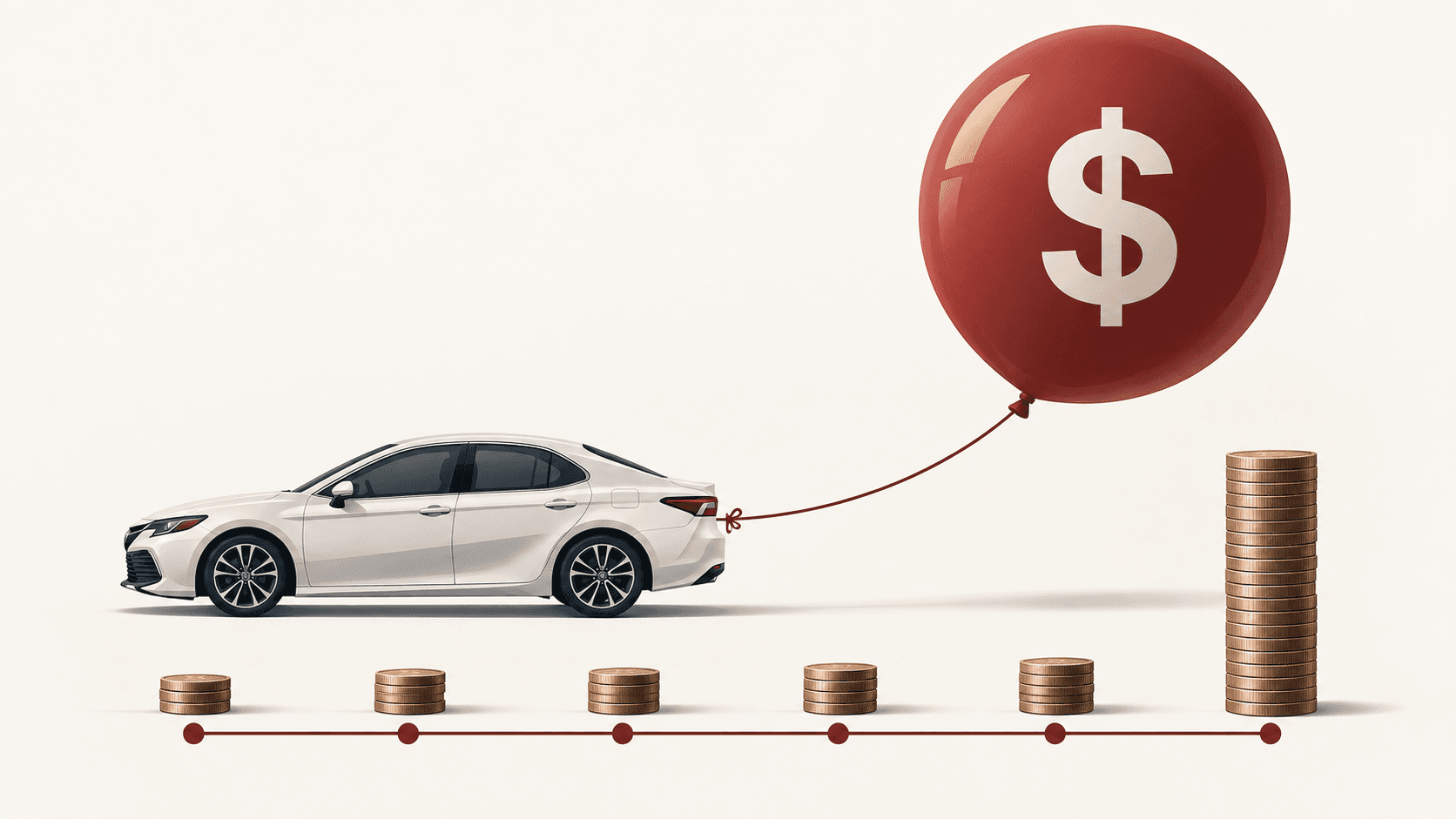
Car dealers often sell the monthly payment instead of the price. A buyer comes in for one car, gets talked up to the one next to it, and the salesperson only ever mentions the monthly number, which always sounds small.
That's the whole trick, and it's why "what's the average car payment" is one of the most-searched money questions in America. People aren't really asking for a statistic. They're asking whether the number on their own paperwork is normal, or whether they got played. So let's do both - the actual averages, and then the harder question underneath them.
Quick answer: the average car payment right now
According to Experian's State of the Automotive Finance Market report for the second quarter of 2026:
| What you're financing | Average monthly payment | Change over the past year |
|---|---|---|
| New car loan | $765 | Up about 2.1% |
| Used car loan | $542 | Up about 1.9% |
| New car lease | $617 | Up about 0.7% |
Those are averages across every credit score, every term and every kind of vehicle, from a base sedan to a loaded pickup. Treat them as a benchmark, not a target. Figures are as of Q2 2026 and Experian updates them every quarter.
What's actually inside that $765
An average payment is the output of four inputs: how much you borrow, your interest rate, your loan term, and your down payment. Work backwards from $765 at the average new-car rate of 6.35% and you land on roughly $45,700 financed over about six years.
Six years. That's the part most people skip past. The average new car loan now runs close to 69 months and the average used car loan close to 68 - a length that was unusual not long ago and is now routine. It's not that borrowers got comfortable with debt; it's that stretching the term is the only way a $45,000 loan produces a payment anyone will sign for.
The used-car side works the same way. A $542 average payment at the average used rate of 11.19% over a similar term implies around $27,000 financed. Cheaper car, much more expensive money.
If you want to see how your own numbers behave, the auto loan calculator will show the payment and the total interest side by side, which is the comparison dealers rarely put in front of you. For the mechanics of how the loan itself works, see how a car loan works.
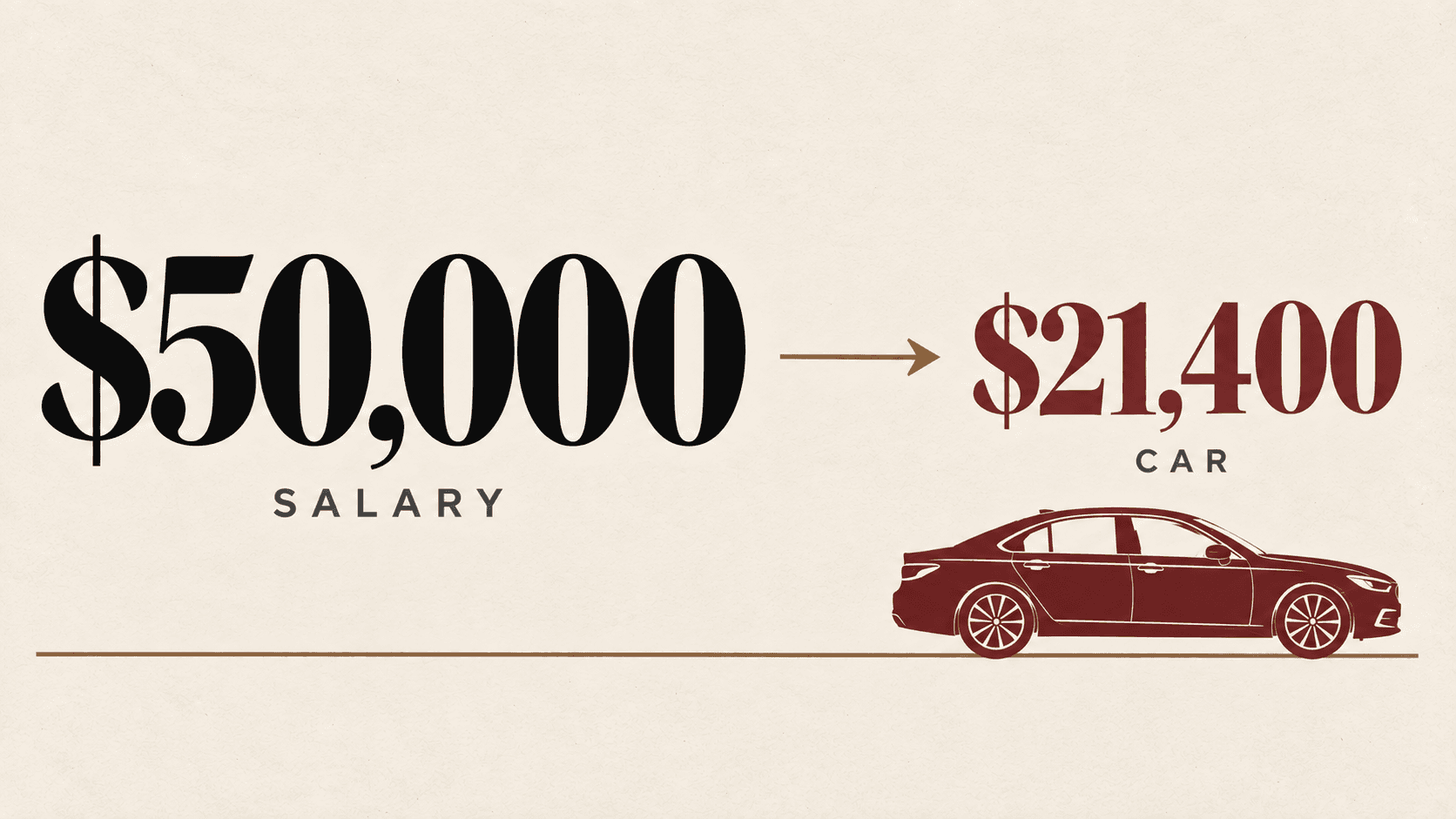
Related: How much car you can afford on your salary
Average car payment by credit score
This is the single biggest variable you have any control over. Experian's rate data by credit tier shows how wide the spread gets:
| Credit profile | Average new car rate | Average used car rate |
|---|---|---|
| Strongest credit | About 4.41% | About 6.29% |
| Weakest credit | About 16.11% | About 21.62% |
Read those used-car numbers again. A borrower with thin or damaged credit can pay more than three times the rate of a borrower with strong credit on the same car. On a $27,000 used-car loan, that gap is worth thousands of dollars - money that has nothing to do with the vehicle and everything to do with a number on a credit file.
Which is why the most profitable hour you can spend before car shopping is usually spent on your credit, not on the lot. We covered where the cutoffs actually fall in what credit score you need to buy a car.
So what's a reasonable car payment?
The old guideline is the 20/4/10 rule: put 20% down, take a loan of no more than 4 years, and keep total vehicle costs under 10% of gross income. Almost nobody follows it anymore - the average term alone is 50% longer than the rule allows - but the 10% part is still a useful test.
Run it both directions:
- A $400 payment sits at 10% of gross income for someone earning about $48,000 a year.
- A $765 payment - the national average - needs roughly $92,000 a year to clear the same bar.
- A $1,000 payment implies about $120,000 a year.
That third line is the uncomfortable one, because plenty of people signing $1,000 payments are not earning $120,000. And that's the honest answer to "is my payment reasonable": it's not about the average, it's about your income. A $300 payment can be reckless and an $800 payment can be perfectly sensible. Same numbers, different lives.
Is a $400 car payment a lot?
As a raw number, no - $400 is comfortably below both the new-car average of $765 and the used-car average of $542. If you're paying $400 a month, you're on the affordable end of what Americans are actually doing.
The catch is what else is riding on it. Insurance, fuel, registration and maintenance don't show up on the finance sheet, and together they often add another couple of hundred dollars a month. A $400 payment on a $35,000 income, with full-coverage insurance on a financed car, can be tighter than a $700 payment on double that income.
What counts as a high car payment?
Above roughly $765 you're above average for a new car. But the number worth knowing is this one: about 20% of financed new-vehicle purchases in Q2 2026 carried a payment of $1,000 or more, according to Edmunds - roughly one in five buyers, matching the record set at the end of 2025.
Four-figure car payments used to be a luxury-market story. Now they're mainstream, and they land in the same part of a budget as rent. That's the level where a car stops being transport with a cost attached and starts being the second-biggest financial commitment in the household.
How the loan term quietly sets your payment
Because the term does most of the work, it's worth seeing the trade in numbers. Here's $43,000 financed at the average new-car rate of 6.35%:
| Loan term | Monthly payment | Total interest paid |
|---|---|---|
| 60 months (5 years) | About $838 | About $7,300 |
| 72 months (6 years) | About $720 | About $8,800 |
| 84 months (7 years) | About $636 | About $10,400 |
Stretching from five years to seven drops the payment by about $202 a month and costs roughly $3,100 extra in interest. Worse, it keeps you owing money on a depreciating asset for longer, which is the usual path into a negative equity car loan. We ran this across a range of amounts and terms in the Car Loan Cost Index.
Average payment by type of vehicle
Powertrain matters more than people expect. Among new vehicle loans in Q2 2026, Experian reported average monthly payments of $646 for hybrids, $692 for EVs and $721 for gasoline vehicles. Hybrids coming in cheapest than gas cars is a genuine shift - and it doesn't even count the fuel savings.
What to do if your payment is above average
Being above the average isn't automatically a problem. Being above what your income can carry is. If yours is, there are only a few real levers:
- Refinance, if your credit has improved. Borrowers who refinanced in Q2 2026 cut their payment by an average of $83 a month. By lender type, credit unions delivered the largest average reduction at $102, ahead of banks at $65 and finance companies at $38.
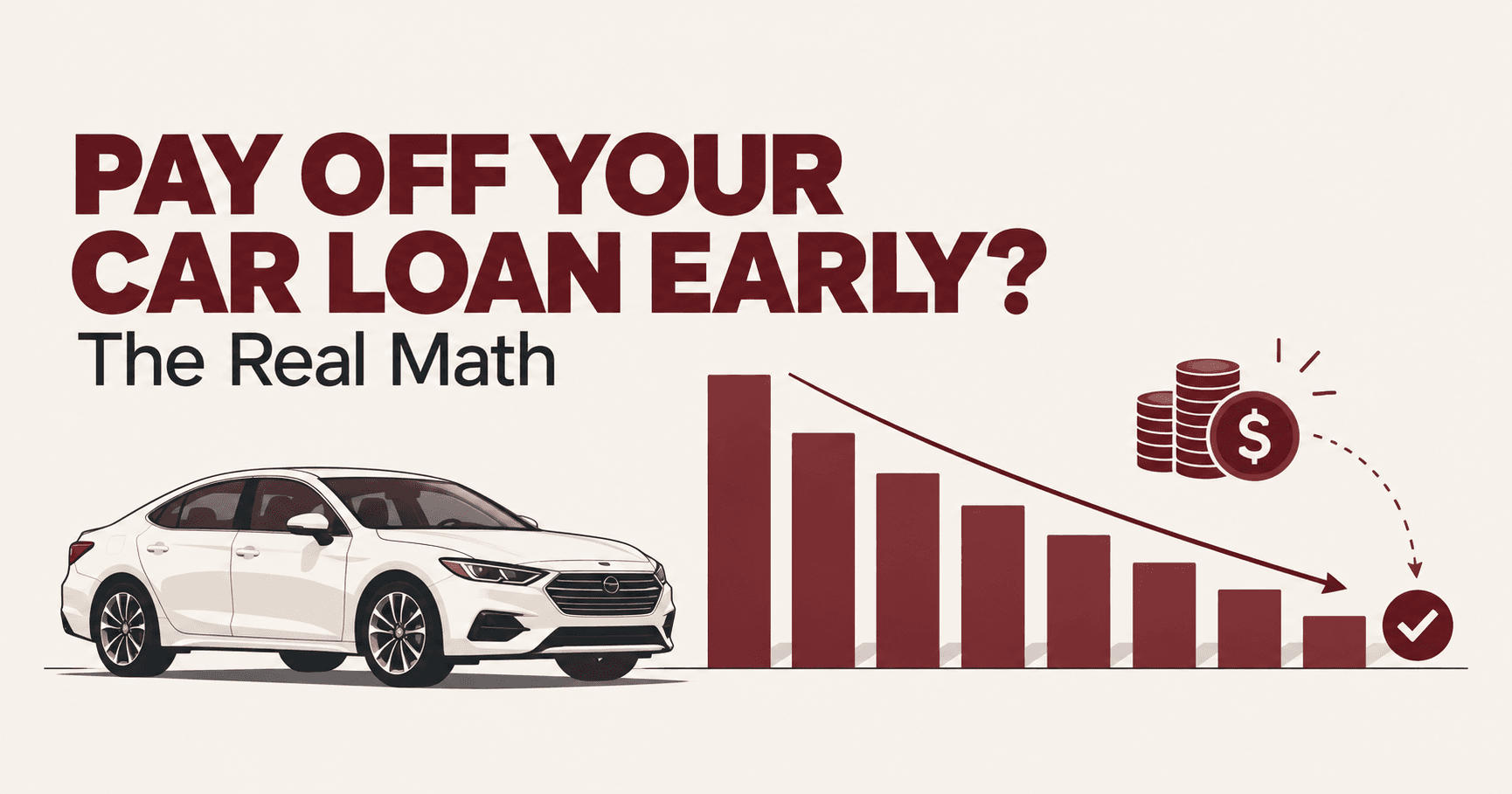
- Pay extra toward principal. This doesn't lower the required payment, but it shortens the loan and cuts total interest - worth reading whether you should pay off your car loan early first, because there are cases where it's the wrong move.
- Don't refinance into a longer term just to lower the payment. That's how a stressful payment becomes a cheap-feeling payment on a car you'll still owe money on in 2033.
- On the next car, buy the term, not the payment. Decide the term first, then see what car that payment buys. It's the reverse of how the transaction is normally run, and that's the point.
Related: What a balloon payment car loan really costs
The part the averages don't tell you
Every one of these figures is a midpoint of an enormous range. Nobody is the average buyer with the average credit score financing the average amount. The genuinely useful thing about $765 isn't that it's a target - it's that it gives you a reference point the finance office doesn't want you anchored to. When someone tells you a payment "isn't bad," you now know what not bad actually looks like across the country.
And if the number in front of you is well above it, that's not a verdict. It's a prompt to check the term, the rate and your own income before you sign - the three things that are still yours to decide.
Frequently Asked Questions
- What is the average car payment?
- As of the second quarter of 2026, the average monthly payment was $765 for a new car and $542 for a used car, according to Experian. A new-vehicle lease averaged $617 a month. Your own payment depends on how much you finance, your interest rate, your down payment and the loan term.
- What's a reasonable car payment?
- A widely used rule caps all vehicle costs at about 10% of your gross monthly income. On that basis, a $400 payment fits an income of roughly $48,000 a year and a $765 payment fits roughly $92,000. If the payment is squeezing out your savings or emergency fund, it's too high for you regardless of what the average says.
- Is a $400 car payment a lot?
- It's well below the national average for both new ($765) and used ($542) cars, so as a number it's on the low side. Whether it's a lot for you depends on income: at 10% of gross pay, $400 a month suits someone earning about $48,000 a year. On $30,000 a year it's a stretch.
- What counts as a high car payment?
- Anything meaningfully above $765 a month is above average for a new car. Payments of $1,000 or more used to be rare and now aren't - about 20% of financed new-vehicle purchases were at that level in the second quarter of 2026, according to Edmunds. That's the range where the payment starts competing with rent or a mortgage.
- What percentage of my income should my car payment be?
- Around 10% of gross monthly income for the payment alone, with total car costs including insurance, fuel and maintenance staying under about 15–20%. These are rules of thumb, not laws - the point is to check the payment against your income rather than against what a dealer says you qualify for.
- Why is the average car payment so high?
- Two reasons, and price is only one. The average new-car loan is now over $40,000, and buyers are stretching terms to nearly six years to keep the monthly figure manageable. Rates actually eased slightly over the past year, but bigger balances more than cancelled that out, so average payments still rose about 2% for new cars.
- How can I lower my car payment?
- Refinancing is the most direct route if your credit has improved since you bought - borrowers who refinanced in the second quarter of 2026 cut their payment by an average of $83 a month, and credit unions delivered the biggest average reduction at $102. Otherwise, a larger down payment, a shorter term on your next loan, or a cheaper car are the real levers.
- Is the average car payment still going up?
- Yes, but more slowly than it was. New-vehicle payments rose about 2.1% over the year to the second quarter of 2026, used about 1.9%, and leases just 0.7%.
Sources
- Experian's State of the Automotive Finance Market report (experian.com)
- Experian's rate data by credit tier (experian.com)
- Edmunds: Q2 2026 new-vehicle financing (share of $1,000+ payments) (edmunds.com)
Get new money guides and tools in your inbox
New guides, calculators and data studies when they publish. No spam, unsubscribe anytime.