How Much Car Can I Afford?
A dealer will tell you what you're approved for. That's a different question from what you can afford. Here's how to work it out from your income - including what each salary actually buys, and why the answer is usually a cheaper car than you were shown.
Picture it: you're halfway through buying a car and the dealer says you're approved for $42,000. You earn $58,000 a year. Ask what the payment is, and if the answer is "we'll get to that," you've been sold on the approval, not on the cost.
So let's answer the real question, because "how much car can I afford" and "how much will they lend me" are two completely different numbers, and only one of them has your interests in it.
Quick answer: the 10% rule
Keep the car payment at roughly 10% of your gross monthly income, and total vehicle costs - payment, insurance, fuel, maintenance, registration - under about 15–20%.
Run that through a typical five-year loan at current rates and it produces a clean rule of thumb: a car priced at about 43% of your gross annual income, with no money down. Put cash down and you can go higher.
You can run your own figures in the car affordability calculator, which works from your income rather than from a payment and also checks your total debt-to-income.
How much should you spend on a car, by salary
Here's what the 10% rule actually buys. Every figure is computed at a 6.35% APR over 60 months - roughly the current US average new-car rate - assuming no down payment, so treat each as a floor:
| Annual salary | Max monthly payment | Loan it supports |
|---|---|---|
| $40,000 | $333 | About $17,100 |
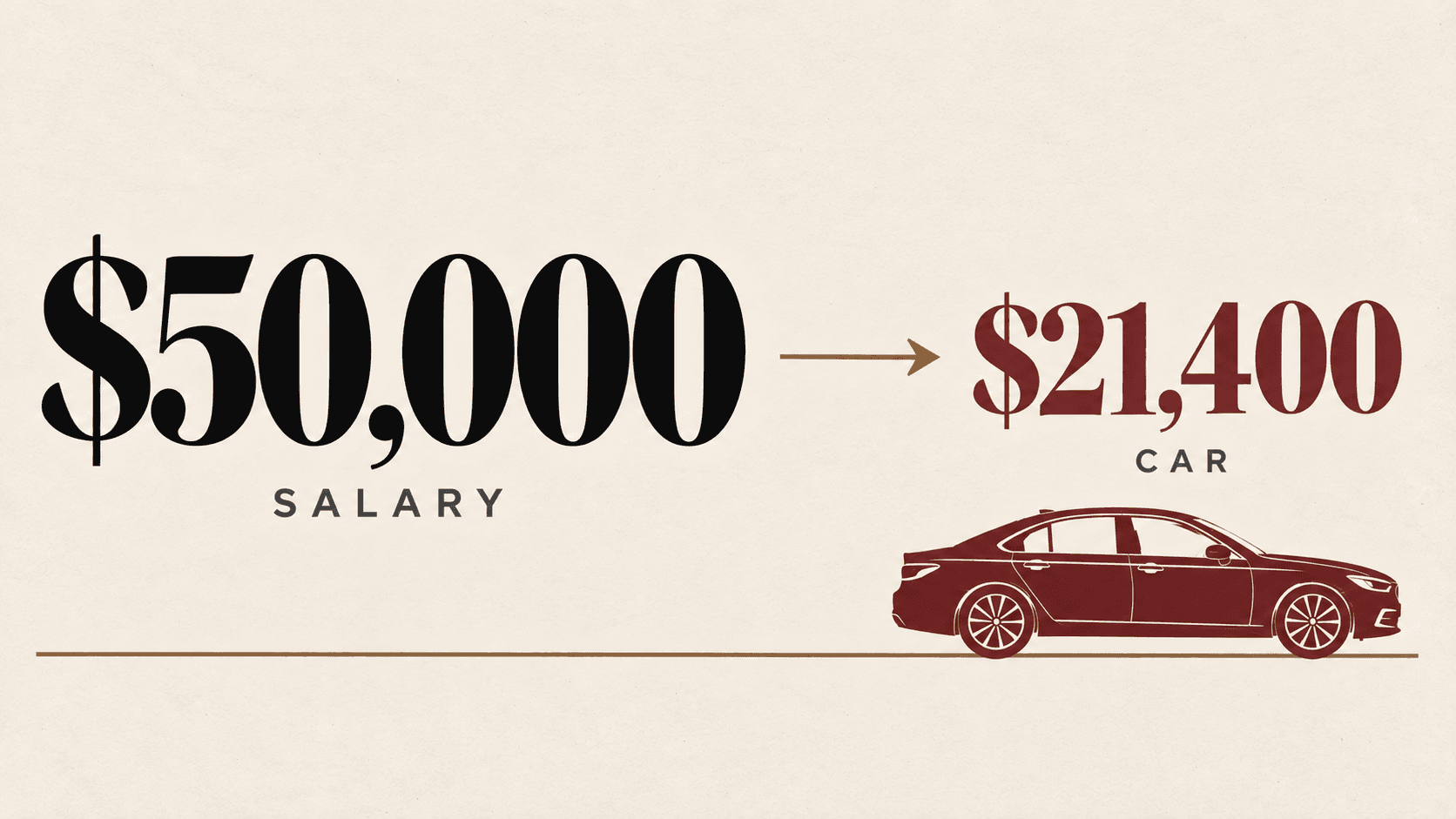
| $50,000 | $417 | About $21,400 |
| $60,000 | $500 | About $25,600 |
| $75,000 | $625 | About $32,100 |
| $100,000 | $833 | About $42,700 |
| $120,000 | $1,000 | About $51,300 |
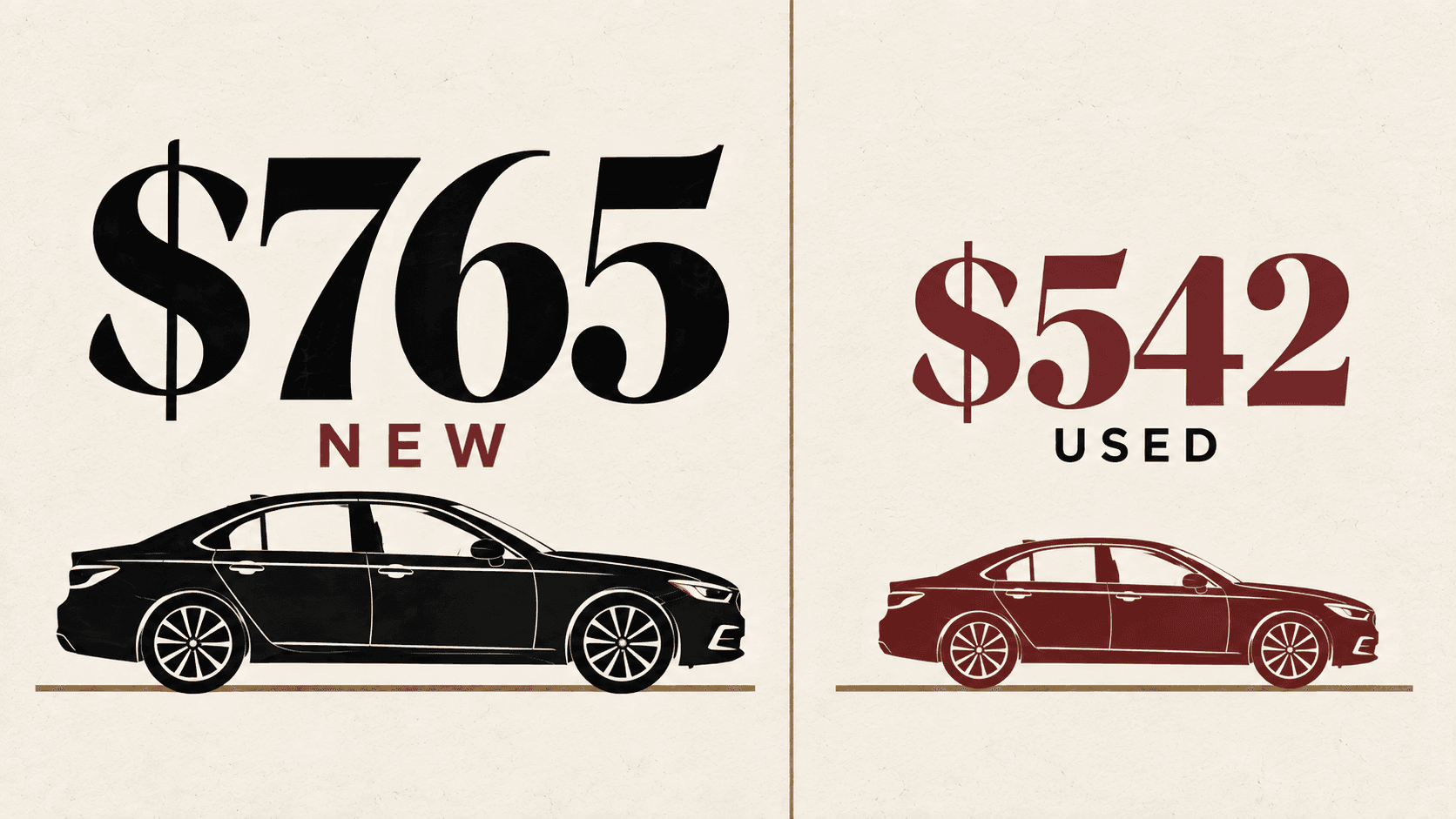
Now the reality check. The average new-car payment in the US is about $765 a month - a figure that only clears this same 10% test at a household income near $92,000. Most people signing that payment aren't earning that. Which is the honest reason the used market, not the new one, is where the majority of budgets actually land.
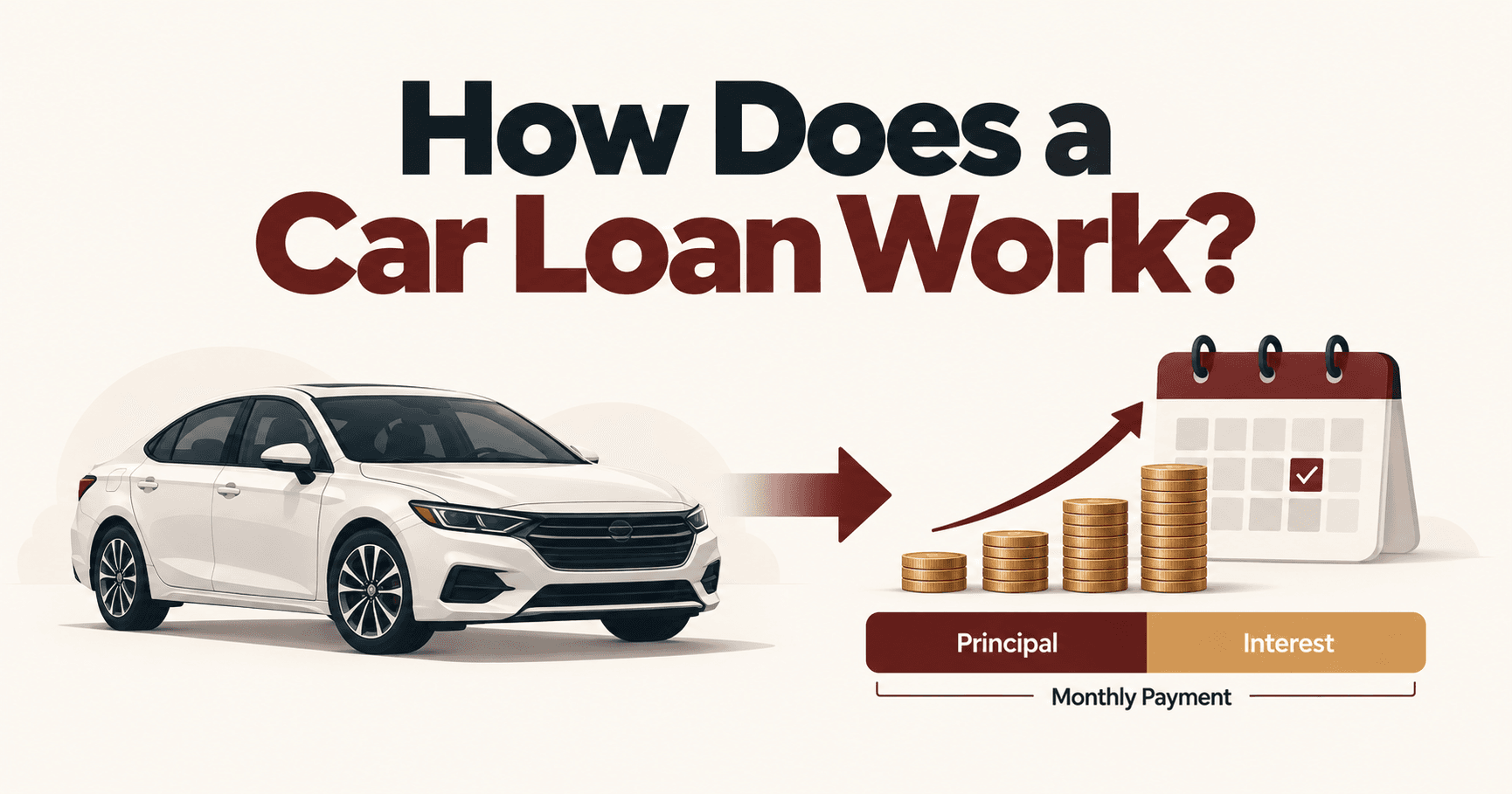
Related: How a car loan works
What percentage of your income should your car payment be?
Ten percent is the conventional answer, but it's worth knowing what each level feels like:
- 10% of gross income - comfortable. Leaves room for retirement contributions and an emergency fund.
- 15% - workable if you have no other debt and stable income. Tight if either changes.
- 20% - the car is now competing with your savings. Fine for a short stretch, corrosive for six years.
There's a second test that people skip: total debt-to-income. All your monthly debt payments together - rent or mortgage, student loans, credit cards, this car - should ideally stay under about 36% of gross income. A 10% car payment can still be unaffordable if the other 30% is already committed. That's why the calculator asks about your existing debts and applies whichever limit is stricter.
The 20/4/10 rule, and whether it still works
The classic guideline has three parts: put 20% down, finance for no more than 4 years, and keep total vehicle costs under 10% of gross income.
Almost nobody follows it now. Average loan terms run close to six years, which breaks the second rule immediately. But the rule still earns its keep as a stress test rather than a commandment. If a car only fits your budget at 72 or 84 months, the honest conclusion isn't that the rule is outdated - it's that the car is too expensive. The Car Loan Cost Index puts a number on what those extra years cost: stretching a $43,000 loan from five years to seven saves about $200 a month and costs roughly $3,100 more in interest.
How much down payment do you need on a car?
20% on a new car, around 10% on a used one. The usual explanation is that it lowers your payment, which is true but minor. The real reason is depreciation.
A new car loses value fastest in its first year. Combine a small deposit with a long term and for a while you owe more than the car is worth - negative equity. It costs you nothing while everything goes to plan, and it costs you a lot the moment you need to sell, trade in, or total the car. A real down payment is what keeps you on the right side of that line.
On a $30,000 car, 20% is $6,000. If that sounds like a lot, that's useful information too: the deposit you can raise is itself a signal about the price bracket you should be shopping in.
How much is too much to pay for a car?
Three signals, any one of which is enough:
- The payment clears roughly 15% of gross income.
- All your debt payments together clear 36%.
- The car only becomes affordable at 72 or 84 months.
The third is the most reliable, because it's the one dealers reach for. Term length is the lever that makes any car fit any budget on paper, and it's the reason a payment can feel fine while the total cost quietly grows by thousands.
Used cars change the maths
The income rules are identical, but two things shift. First, used-car interest rates are much higher - averaging around 11% against roughly 6% on new - so the same monthly payment buys noticeably less loan. Second, maintenance arrives sooner, so leave room for it rather than spending your full result.
What you get in exchange is the depreciation curve's steepest part already paid for by someone else. For most of the salaries in the table above, a used car is simply the realistic answer, and framing that as settling for less gets it backwards.
Why your approval is bigger than your budget
This is worth saying plainly, because it catches out careful people. A lender's approval is a judgement about the probability you repay. It's not an assessment of whether the payment leaves you able to save, absorb a boiler replacement, or change jobs.
Your rate also depends heavily on your credit file - see what credit score you need to buy a car - so the hour you spend on your credit before shopping is usually worth more than the hour you spend negotiating price.
The costs no affordability calculator includes
Every tool on this subject, including ours, sizes the loan payment. On top of it sit sales tax, title, registration, insurance, fuel and maintenance. Insurance is the one that surprises people: a financed car requires comprehensive and collision coverage, so the premium is often meaningfully higher than on the paid-off car you're replacing.
That's the whole reason the 10% guideline has a 15–20% companion. Spend your full calculated maximum on the payment alone and you've quietly blown the real budget.
Related: Why a balloon payment makes a car look cheaper than it is
A simpler way to run it
Decide the payment first, from your income. Then decide the term - five years or fewer. Then see what car those two produce, and shop in that bracket. It is the exact reverse of how the transaction is normally run, and that reversal is the entire advantage.
Work out your number in the car affordability calculator, then use the auto loan calculator on a specific car to see the payment and total interest. If you're already in a loan that feels too big, paying it off early is worth reading before you refinance into something longer.
Frequently Asked Questions
- How much should I spend on a car?
- Enough that the payment stays near 10% of your gross monthly income and total vehicle costs stay under roughly 15–20% once insurance, fuel and maintenance are counted. Run through a five-year loan, that works out to a car priced at about 43% of your gross annual income with no money down. A down payment raises that ceiling.
- What percentage of my income should my car payment be?
- Around 10% of gross monthly income for the payment itself. Some people stretch to 15%, which is workable on a higher income with no other debt, and 20% is where the car starts crowding out saving. The other test that matters is total debt-to-income: all your monthly debt payments together, ideally under 36% of gross income.
- How much car can I afford on a $50,000 salary?
- About $417 a month at the 10% rule, which supports roughly $21,400 of loan over 60 months at a 6.35% APR, plus whatever you put down. Realistically that's a used car or a modest new one - and that's normal, not a failure.
- How much down payment do I need on a car?
- 20% on a new car and around 10% on a used one is the traditional target. The reason is depreciation rather than the monthly payment: new cars lose value fastest in year one, so a small deposit on a long loan can leave you owing more than the car is worth.
- How much is too much to pay for a car?
- When the payment pushes past roughly 15% of your gross income, or when all your debt payments together clear 36%, or when the only way the car fits is a 72- or 84-month loan. That last one is the clearest signal - if the car needs seven years to look affordable, it isn't.
- Why did the dealer approve me for more than I can afford?
- Because approval answers a different question. A lender is assessing the likelihood you repay, and the payment is often made to look manageable by extending the term. Neither calculation asks whether you'll still be able to save. The gap between your approval and your budget is usually just loan term.
- How much should I spend on a used car?
- The same income maths applies, with two adjustments: used-car interest rates run much higher -averaging around 11% versus roughly 6% on new - so the same payment buys less loan, and you should budget for earlier maintenance. Around 10% down is a reasonable floor.
- Should I buy a cheaper car or take a longer loan?
- A cheaper car, almost always. Both routes produce an affordable monthly payment, but the longer loan costs more in total interest and keeps you in negative equity for longer. Buying less car gets you the same payment without either penalty.
Sources
Get new money guides and tools in your inbox
New guides, calculators and data studies when they publish. No spam, unsubscribe anytime.